
Getting out of debt is not always easy. For many people, monthly loan payments, credit card bills, high interest rates, and unexpected expenses make it difficult to stay financially comfortable. Even when someone has a steady income, a large portion of their earnings can disappear into debt repayments before they have a chance to save or plan for the future.
The good news is that paying off debt does not always require a higher salary or dramatic lifestyle changes. What matters most is understanding your financial situation, choosing a repayment strategy that works for you, and following a realistic plan.
Whether you are dealing with credit card balances, personal loans, student loans, or multiple monthly payments, having a clear debt payoff strategy can make the process easier to manage.
In this guide, we will explore practical ways to reduce debt, understand different repayment methods, avoid common financial mistakes, and build healthier money habits that support long-term financial stability.
What Is Debt Payoff?

Debt payoff refers to the process of gradually repaying money borrowed from lenders, banks, credit card companies, or other financial institutions. It involves making regular payments toward outstanding balances until the amount owed is completely cleared.
Depending on the type of borrowing, your repayment may include the original amount borrowed, interest charges, and additional fees.
For example, if you have a credit card balance of $4,000, paying more than the minimum amount each month can help reduce the outstanding balance faster. The sooner you bring down high-interest debt, the less money you may spend on interest over time.
Debt payoff is not simply about paying bills. It is also about making better financial decisions, understanding your spending habits, and creating enough room in your budget for savings and future goals.
Why Is Having a Debt Payoff Plan Important?
Without a repayment strategy, debt can become difficult to control. People often focus on whichever bill is due next without considering how interest rates, payment amounts, and loan terms affect their overall financial situation.
A well-planned repayment approach gives you a better understanding of where your money is going.
Here are some important reasons to create a debt payoff plan.
1. Reduce Interest Expenses
Interest can make borrowing significantly more expensive. When you carry a credit card balance or maintain a loan for several years, interest charges can increase the total amount you eventually repay.
Prioritizing high-interest debt can help reduce these additional costs.
2. Improve Financial Flexibility
When you pay off a loan or credit card, the money previously reserved for monthly payments becomes available for other priorities.
You can use that extra money to build an emergency fund, contribute toward retirement, or save for a major purchase.
3. Reduce Financial Stress
Managing several payments every month can feel overwhelming. A repayment plan gives you a clear direction and helps you focus on achievable financial goals instead of worrying about every outstanding balance.
4. Build Better Money Habits
Debt repayment encourages you to understand your income, track spending, and make more thoughtful purchasing decisions.
These habits can continue benefiting your finances long after your debts are paid off.
5. Support Your Credit Health
Making payments on time and reducing credit card balances can support healthier credit management. However, paying off debt does not guarantee an immediate increase in your credit score, as credit scoring models consider several factors.
Popular Debt Payoff Strategies That Actually Work
There is no single repayment method that works for everyone. Your ideal strategy depends on how much you owe, the interest rates attached to your accounts, and what motivates you to stay consistent.
Here are some commonly used approaches.
1. The Debt Snowball Method
The debt snowball method focuses on paying off your smallest outstanding balance first, regardless of its interest rate.
You continue making minimum payments on all your other accounts while putting additional money toward the smallest debt.
Once that balance reaches zero, you take the money you were paying toward it and apply it to the next-smallest balance.
Example:
Suppose you have three outstanding debts:
Debt | Outstanding Balance |
|---|---|
Credit Card A | $500 |
Personal Loan | $2,000 |
Credit Card B | $4,000 |
You would start with Credit Card A, followed by the personal loan and then Credit Card B.
Why people choose this method:
Provides early repayment milestones.
Reduces the number of outstanding accounts.
Helps build motivation.
Makes repayment progress easier to see.
The main disadvantage is that you could pay more interest overall if larger debts carry significantly higher interest rates.
2. The Debt Avalanche Method
The debt avalanche method takes a different approach. Instead of focusing on the smallest balance, it prioritizes the debt with the highest interest rate.
You make the minimum required payments on all accounts and direct any additional money toward the most expensive debt.
After clearing that balance, you move to the account with the next-highest interest rate.
Example:
Imagine you have the following debts:
Debt | Balance | Interest Rate |
|---|---|---|
Credit Card A | $2,000 | 24% |
Credit Card B | $3,500 | 18% |
Personal Loan | $5,000 | 11% |
With this strategy, you would focus on Credit Card A first because it carries the highest interest rate.
Why this method can be effective:
Helps reduce interest expenses.
Prioritizes expensive borrowing.
Can lower the total repayment cost.
Encourages a mathematically focused repayment approach.
The biggest challenge is that paying off a large balance first may take time, especially when you are managing several debts.
3. Debt Consolidation
Debt consolidation involves combining multiple outstanding debts into one new loan or repayment arrangement.
Instead of managing several separate payments, you may have one monthly payment with a single repayment schedule.
For example, someone carrying balances across three credit cards might consider a debt consolidation loan to combine those balances.
However, consolidation is not automatically a money-saving solution. Before accepting an offer, compare:
Annual percentage rate (APR).
Loan origination fees.
Repayment duration.
Monthly payment amount.
Total interest payable.
Any penalties or additional charges.
A lower monthly payment may simply mean you are repaying the debt over a longer period. Always compare the total cost rather than looking at the monthly payment alone.
4. Balance Transfer Credit Cards
A balance transfer allows you to move an existing credit card balance to another card, often with a promotional low or 0% introductory interest rate.
This option can be useful for people who qualify for favorable offers and have a realistic repayment plan.
However, promotional periods are limited, and balance transfer fees may apply. You should also understand what interest rate will apply once the promotional period ends.
Avoid transferring balances simply to create more available credit without addressing the spending habits that caused the debt.
5. Negotiate With Your Lender
If your financial circumstances have changed, contacting your lender may be worth considering.
Some lenders offer hardship programs, modified repayment schedules, temporary payment arrangements, or interest-rate adjustments for eligible borrowers.
Before agreeing to anything, ask about the effect on your account, credit reporting, fees, and total repayment amount.
Always request the updated terms in writing.
7 Practical Steps to Start Paying Off Debt
A successful repayment plan starts with small, manageable actions. Instead of trying to change everything overnight, focus on building a system you can maintain.
Step 1: List All Your Outstanding Debts
Start by creating a complete list of everything you owe.
Include:
Credit card balances.
Personal loans.
Student loans.
Auto loans.
Medical bills.
Buy now, pay later balances.
Other outstanding borrowing.
For each account, record the balance, interest rate, minimum payment, and payment due date.
Having all this information in one place makes it easier to understand your financial position.
Step 2: Understand Your Monthly Budget
Your repayment plan should be based on the money you actually have available.
Write down your monthly income and regular expenses, including housing, groceries, utilities, transportation, insurance, and debt payments.
Look for expenses that can be reduced without affecting essential needs.
The goal is to identify a realistic amount that you can consistently put toward additional debt payments.
Step 3: Choose a Repayment Strategy
Decide whether the snowball or avalanche method better suits your situation.
If you prefer seeing quick results, the snowball method may help you stay motivated.
If reducing interest costs is your main priority, the avalanche method may be more suitable.
Whichever method you choose, continue making at least the required minimum payments on your other accounts whenever possible.
Step 4: Set a Realistic Monthly Payment Target
Avoid setting repayment targets that leave you without enough money for essential expenses.
For example, if your monthly income is $4,000, you should first account for rent, food, utilities, transportation, insurance, and other necessary spending.
Only then should you decide how much extra money can comfortably go toward debt repayment.
A sustainable plan is more useful than an aggressive target that becomes impossible to maintain after a few weeks.
Step 5: Reduce Unnecessary Spending
Small spending decisions can make a noticeable difference over time.
Consider reviewing:
Unused subscriptions.
Frequent restaurant orders.
Impulse purchases.
Unplanned online shopping.
Expensive entertainment habits.
Unnecessary service upgrades.
You do not need to remove every enjoyable activity from your life. The idea is to identify spending that does not provide much value and redirect some of that money toward repayment.
Step 6: Consider Additional Income Opportunities
If your current income leaves very little room for debt payments, finding an additional source of income may help.
Depending on your skills and available time, you could explore:
Freelance writing or design.
Online tutoring.
Part-time work.
Selling unused household items.
Consulting or professional services.
Weekend projects or temporary assignments.
Even a modest additional income can help accelerate repayment when it is used consistently.
Step 7: Review Your Progress Every Month
Your debt payoff plan should not remain unchanged forever.
Review your outstanding balances, monthly payments, interest charges, and spending patterns regularly.
If your income increases or certain expenses decrease, consider adjusting your repayment amount.
Celebrate meaningful milestones, whether that means paying off your first credit card or reducing your total outstanding balance by 25%.
Progress is easier to maintain when you can actually see it.
How to Pay Off Credit Card Debt Faster
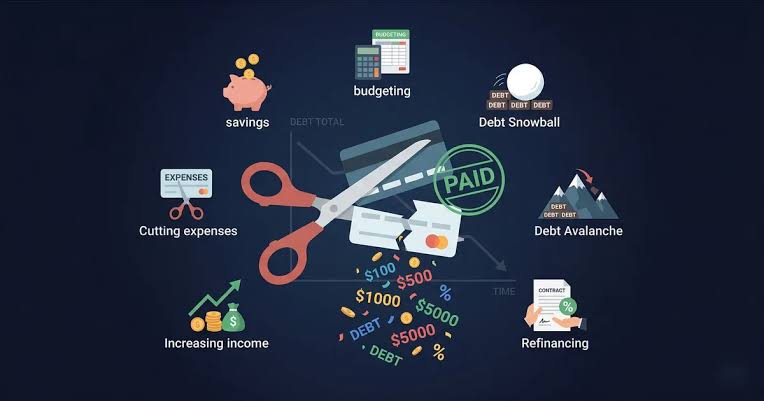
Credit card debt can become expensive because many cards charge relatively high interest rates. Carrying a balance from month to month may also make it harder to manage other financial responsibilities.
Here are some practical ways to approach credit card repayment.
Pay more than the minimum whenever possible. Minimum payments help keep your account current, but paying only the minimum can extend your repayment period and increase the total interest you pay.
Stop adding unnecessary balances. Try to avoid using a credit card for purchases you cannot comfortably repay.
Check your interest rate. Understanding your APR helps you identify which card is costing you the most.
Explore lower-interest options carefully. A balance transfer or consolidation loan may help if the fees, promotional terms, and total repayment cost make financial sense.
Set up payment reminders. Automatic payments or calendar reminders can help prevent missed due dates.
Most importantly, do not ignore a growing balance. Addressing the problem early can make repayment easier.
Common Debt Payoff Mistakes to Avoid
Even with a repayment plan, certain mistakes can slow your progress or create additional financial pressure.
1. Paying Only the Minimum Amount
Minimum payments can keep accounts in good standing, but they may not reduce your outstanding balance quickly, particularly when interest charges are high.
Whenever your budget allows, contribute something extra.
2. Ignoring High-Interest Debt
A large balance does not always mean a debt should be your first priority. Interest rates matter because high-interest borrowing can become more expensive over time.
3. Using New Loans Without Comparing Costs
Taking out another loan to repay existing borrowing may appear convenient, but it can increase your overall financial obligations if the new loan has unfavorable terms.
Compare the APR, fees, repayment period, and total cost before making a decision.
4. Draining Your Entire Savings
Putting every available dollar toward debt can leave you financially vulnerable when an unexpected expense appears.
Try to maintain an appropriate emergency reserve while balancing your repayment priorities.
5. Ignoring Payment Due Dates
Missed payments may result in late fees, additional interest, and negative credit reporting.
Use reminders or automatic payments where appropriate.
6. Falling for Debt Relief Promises
Be cautious of companies that guarantee to eliminate your debt, promise unrealistic reductions, or demand upfront fees.
Debt settlement programs can carry financial and credit-related risks. Research any provider carefully and understand the agreement before signing.
Should You Consider Professional Debt Help?
Sometimes, budgeting and repayment strategies are not enough. If you are struggling to make minimum payments, receiving collection notices, or falling further behind every month, professional assistance may be worth exploring.
Depending on your circumstances, possible options include:
Nonprofit credit counseling: A qualified counselor may review your financial situation, help organize your budget, and explain available repayment options.
Debt management plans: Some credit counseling organizations offer structured repayment programs that may include negotiated interest rates or payment arrangements.
Debt consolidation: Combining eligible debts may simplify payments, provided the new arrangement offers suitable terms.
Debt settlement: This involves negotiating with creditors to accept less than the full outstanding amount. It can involve fees, credit consequences, and possible legal or tax implications, depending on the circumstances.
Before selecting any service, understand its fees, potential consequences, and alternatives. Never assume that a company can guarantee a particular result.
How to Stay Debt-Free After Paying Off Your Loans

Paying off your final balance is a major achievement, but maintaining financial stability requires continued attention.
Here are a few habits that can help you avoid falling into the same borrowing cycle.
Build an emergency fund: Save money for unexpected expenses so you are less dependent on credit cards or personal loans.
Follow a monthly budget: Keep track of income and spending, even after your debts are cleared.
Use credit carefully: Avoid borrowing more than you can reasonably repay.
Save for planned purchases: Set aside money for travel, home improvements, electronics, and other major expenses.
Review financial accounts regularly: Check statements and payment activity to identify errors or unexpected charges.
Continue saving the money you previously used for repayments: Redirecting old debt payments toward savings can help build long-term financial security.
The key is to replace old borrowing habits with healthier financial routines.
Final Thoughts
Getting out of debt is a financial journey that requires patience, planning, and consistency. There may be months when progress feels slow, especially when interest charges and everyday expenses compete for your attention.
However, every additional payment, reduced expense, and better financial decision can move you closer to your goal.
Start by understanding exactly what you owe, choose a repayment method that suits your circumstances, and create a monthly budget you can realistically follow. Avoid taking on unnecessary new debt, stay alert to misleading debt relief offers, and remember to protect your essential savings along the way.
You do not need to solve every financial problem in one month. What matters is having a clear plan and continuing to make progress.