
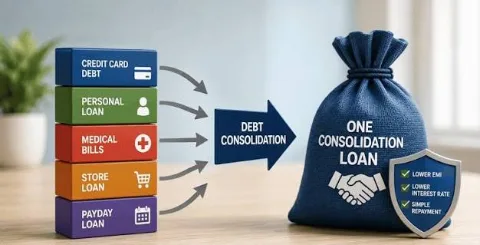
Juggling several debts at once can get stressful, especially when every lender has its own due date, interest rate and minimum instalment. A credit card bill may fall at the start of the month, a personal loan payment a few days later and another balance just before your next salary. Keeping track of it all makes monthly budgeting hard. This is where debt consolidation loans may help, because they let eligible borrowers combine several debts into one new loan. Depending on the interest rate, repayment period and fees, consolidation (opens in a new tab) may also lower the overall cost of borrowing. But picking the right loan takes more than spotting a low advertised rate. In this guide, we’ll look at how these loans work, what to compare before applying and how to decide whether this option suits your budget in 2026.
You need to understand the total repayment amount, eligibility requirements, lender charges and your own financial situation before you commit.
What Are Debt Consolidation Loans?
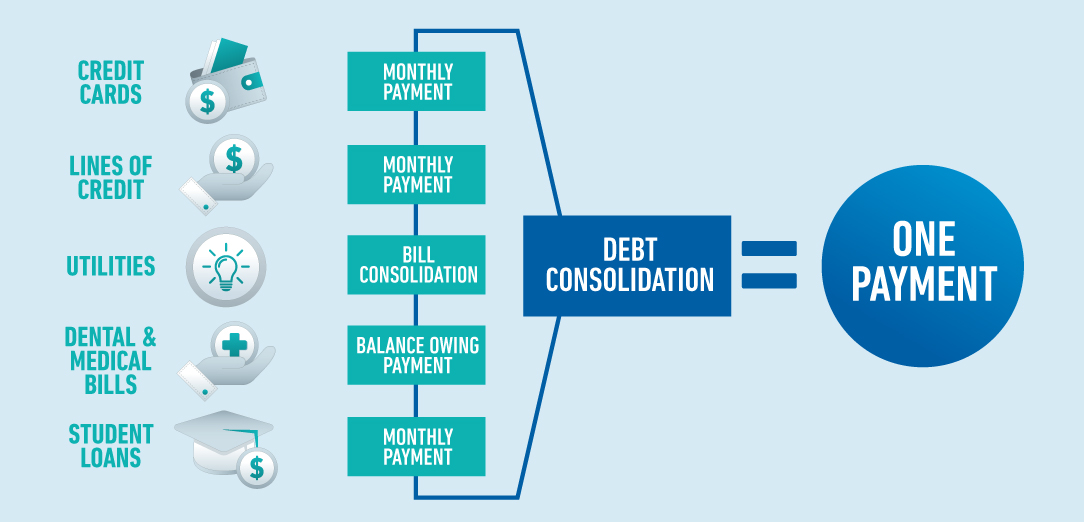
A debt consolidation loan is a type of personal loan used to repay several existing debts. Instead of making separate payments to different lenders, you take out one new loan and use the money to clear some or all of your outstanding balances.
For example, imagine someone has three different debts:
Credit card balance: $4,000
Personal loan balance: $3,000
Store credit balance: $2,000
The total outstanding debt is $9,000. If the borrower qualifies for a $9,000 debt consolidation loan, they can use it to repay these balances and then make a single monthly payment towards the new loan.
The main purpose is to simplify repayment. Depending on the loan terms, it may also help lower interest costs or give you a more manageable repayment schedule.
Remember that consolidation doesn’t erase debt. You still owe the money, but the way you repay it changes.
How Do Debt Consolidation Loans Work?
The process is usually simple, though the exact steps depend on the lender.
First, you add up how much you owe across your credit cards, personal loans and other eligible accounts. Next, you compare lenders and apply for a loan that covers the amount you want to consolidate.
If you’re approved, the lender may deposit the loan amount into your bank account or pay your existing creditors directly. You then use the loan to clear the selected balances.
After that, you make regular monthly payments to the new lender on the agreed schedule.
To picture it, think of a borrower with several credit card payments on different due dates. A consolidation loan can replace those separate payments with one instalment on a fixed date. This can make monthly planning easier, as long as the new repayment terms are affordable.
1. Compare Interest Rates and APR
Interest rates are among the most important factors when choosing a debt consolidation loan. But looking only at the advertised rate gives you an incomplete picture.
Pay attention to the Annual Percentage Rate (APR). It generally includes the interest rate and certain borrowing fees, so it’s more useful for comparing loan offers.
For example, one lender may advertise a 10% interest rate but charge an origination fee. Another may offer an 11% rate with no origination fee. Depending on the repayment period and total borrowing cost, the second option could turn out cheaper.
Before accepting an offer, compare:
Annual percentage rate (APR).
Fixed or variable interest rate.
Origination and processing fees.
Late payment charges.
Early repayment conditions.
Total amount payable.
A slightly higher monthly payment can sometimes be worth it if it helps you clear the debt sooner and pay less interest overall.
2. Choose a Comfortable Loan Repayment Term
The repayment term is how long you have to pay back your debt consolidation loan. Many personal loan lenders offer different repayment periods, depending on the loan amount and borrower eligibility.
A shorter term usually means higher monthly instalments but less interest over time. A longer term can lower your monthly payment, although the total borrowing cost may rise.
Here’s a simple example. Suppose you borrow $10,000 to consolidate existing debt. A three-year term may need a higher monthly payment than a five-year term. But the shorter option could get you debt-free earlier.
The key is to balance affordable monthly payments against the total cost of the loan.
Before choosing a schedule, work out your regular expenses, including rent, groceries, utilities, insurance and emergency savings. Your loan instalment should fit comfortably into your monthly budget.
3. Check Your Credit Score and Loan Eligibility
Your credit score can affect whether you qualify for a debt consolidation loan and what interest rate a lender offers.
In the United States, lenders commonly review credit history, income, outstanding balances and debt-to-income ratio before making a decision.
A stronger credit profile may improve your chances of getting competitive offers. That said, a lower credit score doesn’t automatically mean you can’t apply.
Before submitting an application, consider these steps:
Review your credit report for incorrect information.
Check whether your existing payments are up to date.
Reduce outstanding credit card balances where possible.
Avoid applying for several new loans at the same time.
Compare lenders that offer prequalification.
Some lenders let you check potential loan rates through a soft credit inquiry, which generally doesn’t affect your credit score. A formal application may involve a hard inquiry, so understand the difference before you proceed.
4. Look for Hidden Fees and Additional Charges
A loan with an attractive interest rate can still turn expensive if it comes with extra charges.
Origination fees deserve special attention, because some lenders deduct them from the loan amount before releasing the money. That means you may receive less than you originally borrowed.
For example, if you apply for a $10,000 loan with a 5% origination fee deducted upfront, you would receive $9,500 before any other applicable deductions.
That gap matters when you’re trying to pay off existing balances in full.
Also check whether the lender charges late payment fees, insufficient-funds fees or penalties for early repayment. Read the loan agreement carefully instead of relying only on what’s shown in advertisements.
5. Compare Lenders and Their Reputation
Not every lender offers the same borrowing experience. Some provide flexible repayment options, while others may have stricter eligibility rules or limited customer support.
When comparing debt consolidation lenders, look beyond promotional offers.
Check whether the lender clearly explains its interest rates, loan terms, fees and approval requirements. Read customer feedback to see how the company handles payment issues, account management and complaints.
It’s also worth checking whether the lender offers direct creditor payments. With this option, the lender sends money straight to your existing creditors instead of depositing the whole amount into your bank account.
This can make consolidation more convenient and lower the chance of accidentally spending the money on something else.
Choose a properly authorised lender, and avoid companies that promise guaranteed approval or ask for upfront payments to release a loan.
6. Understand the Benefits and Risks of Debt Consolidation
Debt consolidation loans can be useful, but they aren’t right for everyone. Understanding both sides helps you make a more informed decision.
Benefits of Debt Consolidation Loans
One monthly payment: Instead of managing several repayment dates, you have one main monthly loan payment.
Potential interest savings: If you qualify for a lower APR, you may cut the interest you pay on high-interest credit card balances.
Predictable repayments: Fixed-rate personal loans generally offer regular monthly payments, which makes budgeting easier.
Clear repayment schedule: You know how long the loan is expected to last and when you could become debt-free.
Possible Risks to Consider
Longer repayment periods: A lower monthly payment may look attractive, but stretching the loan can increase the total interest paid.
Additional borrowing costs: Origination fees and other charges can eat into your savings.
Credit score impact: Applying for a loan may involve a hard inquiry, and opening a new account can temporarily affect your credit profile.
More debt: If you keep using credit cards after paying them off through consolidation, you could end up with the new loan and fresh credit card balances.
That last point deserves attention. Consolidation works best when you also deal with the spending habits or financial pressures that caused the original debt.
7. Consider Other Debt Repayment Options
A debt consolidation loan isn’t the only way to manage several outstanding balances. Depending on your situation, another option may suit you better.
Debt Repayment Options Compared
Compare different ways to manage outstanding debt and understand what to check before choosing an option.
| Option | How It Works | Things to Check |
|---|---|---|
| Debt Consolidation Loan | Combines several debts into one new loan. | APR, fees and repayment term. |
| Balance Transfer Credit Card | Moves card balances to a card with a promotional low or 0% APR. | Transfer fees and the regular rate after the promotion ends. |
| Debt Management Plan | Organises repayments through a nonprofit credit counselling organisation. | Possible lower rates negotiated with creditors. |
| Debt Snowball Method | Pays off the smallest balance first. | Works well if you want quick wins. |
| Debt Avalanche Method | Pays off the highest-interest debt first. | Usually saves more on interest. |
Balance Transfer Credit Cards
Some credit cards offer promotional low-interest or 0% APR periods on transferred balances. This may help you pay down credit card debt without piling up as much interest during the promotional period.
However, check the balance transfer fees and the regular interest rate that applies after the promotion ends.
Debt Management Plans
A debt management plan through a reputable nonprofit credit counselling organisation may help you organise repayments and, in some cases, negotiate lower interest rates with creditors.
This can be worth considering if you’re struggling to manage several payments but don’t qualify for an affordable consolidation loan.
Debt Snowball and Debt Avalanche Methods
The debt snowball method focuses on paying off the smallest balance first, while the debt avalanche method goes after the debt with the highest interest rate first.
Both approaches can help you make progress without taking out another loan.
The right choice depends on your income, outstanding balances and ability to keep up regular payments. It’s also a good idea to review your budget and consider nonprofit credit counselling before choosing a consolidation option.
8. Steps to Apply for a Debt Consolidation Loan in 2026
Once you’ve compared your options, the application process becomes easier to manage.
Start by calculating your total outstanding debt. Gather your credit card statements, loan balances and other relevant account details.
Next, check your credit score and research lenders that offer suitable loan amounts and repayment terms. Where available, use prequalification to compare estimated offers without submitting a full application right away.
Prepare documents such as proof of identity, income details, employment information and bank statements. Requirements vary between lenders.
After reviewing your offers, compare the APR, fees, repayment period and total amount payable. Pick the loan that fits your budget, not just the one advertising the lowest monthly instalment.
Finally, read the agreement carefully before you sign. Once the loan is approved, confirm that your previous balances have been paid off and keep making payments on the new schedule.
Final Thoughts
Choosing the best debt consolidation loan in 2026 takes careful planning and a realistic view of your finances. Combining several debts into one payment can make monthly budgeting easier and may reduce interest costs when the new loan offers better terms.
But a lower monthly payment doesn’t always mean a cheaper loan. Interest rates, APR, extra fees and repayment periods all affect the final amount you pay.
Take time to compare lenders, understand your credit profile and work out what you can comfortably afford each month. Most importantly, avoid building new credit card balances after consolidating your existing debt.
A well-planned debt consolidation strategy can make repayments more manageable and give you a clearer path towards becoming debt-free.
Frequently Asked Questions
Common questions about debt consolidation loans and repayment options.