
Introduction
Over the last few decades, the Adani Group (opens in a new tab) has transformed itself from a small trading business (opens in a new tab) into one of India’s most powerful business empires. Today, the group operates across several industries including ports, energy, airports, logistics, mining, cement, and renewable energy. This massive diversification has helped the company create multiple income streams that continue to generate revenue year after year.
The growth of the Adani Group is often discussed because of its rapid expansion and its ability to enter sectors that are essential to India’s economic development. While many businesses depend on a single industry for profits, Adani has built a network of interconnected businesses that support each other. This strategy has played a major role in the group’s continuous revenue growth.
As India’s infrastructure and energy needs continue to increase, the Adani Group has positioned itself at the center of this transformation. From managing some of the country’s busiest ports to investing heavily in renewable energy, the company has created a business model designed for long-term growth. 4 how the Adani Group generates revenue provides insight into how modern conglomerates build sustainable business empires.
The Early Foundation of Adani Group
The journey of the Adani Group began in the late 1980s when Gautam Adani started a commodity trading business. Initially, the company focused on import and export operations, dealing in products such as polymers and agricultural commodities. Over time, the business expanded into infrastructure and logistics, sectors that were becoming increasingly important for India’s growing economy.
One of the biggest turning points for the group came with the development of Mundra Port in Gujarat. The company realized that controlling logistics and transportation infrastructure could create long-term financial opportunities. By investing in ports, the Adani Group gained control over an important part of the supply chain, allowing it to support many of its future businesses.
The success of the port business gave the company the confidence and financial strength to expand into other industries. This expansion strategy became the foundation of the Adani business empire and remains one of the main reasons why its revenue continues to grow.
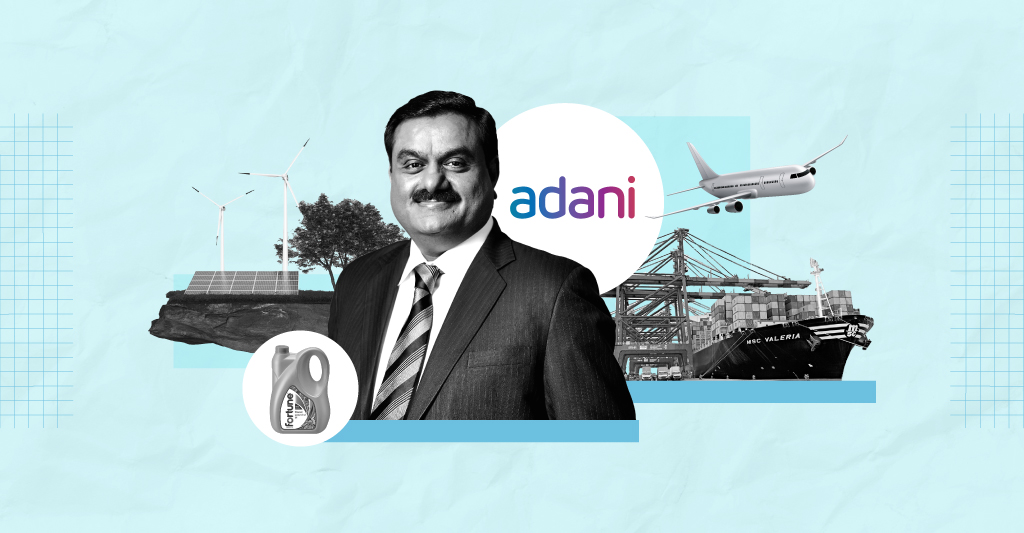 (opens in a new tab)
Dominance in the Port Business
Ports remain one of the strongest revenue-generating sectors for the Adani Group. Through Adani Ports and Special Economic Zone, the group operates several ports across India. These ports handle massive amounts of cargo every year, including coal, containers, crude oil, and agricultural products.
India depends heavily on maritime trade, and this creates enormous opportunities for port operators. As international trade grows, the demand for efficient logistics infrastructure also increases. Adani Ports benefits from this rising demand by charging fees for cargo handling, storage, transportation, and other logistics services.
What makes the company particularly successful is its integrated business model. The ports are connected with railways, warehouses, and logistics services, creating a complete transportation ecosystem. This allows businesses to move goods more efficiently while generating revenue from multiple stages of the supply chain.
The port business (opens in a new tab) also provides stability because trade activities continue regardless of short-term market fluctuations. This steady cash flow supports the company’s expansion into newer industries.
Expansion into Energy and Power
Another major source of revenue for the Adani Group comes from the energy sector. Through companies like Adani Power and Adani Green Energy, the group has established a strong presence in both conventional and renewable power generation.
India’s growing population and industrial development have created an enormous demand for electricity. The Adani Group recognized this opportunity early and invested heavily in thermal power plants, transmission lines, and energy infrastructure. Power generation provides a continuous stream of income because electricity remains an essential service for households, industries, and businesses.
In recent years, the company has also focused aggressively on renewable energy. Solar and wind power projects are becoming increasingly important as governments and businesses shift toward cleaner energy sources. Adani Green Energy has emerged as one of the largest renewable energy companies in India, contributing significantly to the group’s overall growth.
Renewable energy projects often involve long-term contracts with governments and corporations. These agreements provide predictable revenue over many years, helping the company maintain financial stability while expanding further.
The Airport Business and Infrastructure Growth
The Adani Group entered the airport management sector as part of its broader infrastructure expansion strategy. Through Adani Airport Holdings, the company now manages several major airports across India.
Airports generate revenue through multiple channels. Airlines pay fees for landing, parking, and airport operations, while passengers contribute through retail shopping, food courts, parking services, and other commercial activities. As air travel continues to grow in India, airports are becoming highly profitable infrastructure assets.
The airport business also aligns with the group’s logistics and transportation ecosystem. By managing ports, logistics networks, and airports, the Adani Group creates a diversified transportation empire that supports trade, tourism, and economic development.
Infrastructure businesses generally provide long-term revenue opportunities because they are essential for national growth. Governments often support private companies that invest in large-scale infrastructure projects, creating favorable conditions for expansion.
Growth Through Diversification
One of the biggest reasons behind Adani Group’s continuous revenue growth is diversification. Instead of relying on a single business sector, the company has spread its investments across multiple industries. This strategy reduces risk and creates more opportunities for profit.
For example, when one sector experiences slow growth, another sector may continue performing strongly. If global trade slows down temporarily, energy demand may still remain high. Similarly, infrastructure projects can continue generating income even during economic uncertainty.
Diversification also allows the group to use profits from successful businesses to fund expansion into new areas. Revenue generated from ports and power projects can be reinvested into renewable energy, airports, or cement manufacturing. This cycle of reinvestment helps the company grow faster than many competitors.
The interconnected nature of the group’s businesses further strengthens its revenue model. Ports support logistics operations, logistics supports energy transportation, and infrastructure projects create additional commercial opportunities. This integrated approach increases efficiency while generating revenue from several sources simultaneously.
Adani’s Entry into Cement and Construction
The Adani Group expanded further by entering the cement industry, an important sector tied directly to India’s infrastructure boom. Cement demand continues to rise because of urban development, housing projects, highways, and industrial construction.
The acquisition of major cement businesses gave the Adani Group another strong source of revenue. Construction materials remain in high demand as India continues investing in smart cities, transportation systems, and industrial zones.
Cement businesses also complement the company’s infrastructure operations. Large infrastructure projects require huge quantities of construction materials, creating internal business opportunities within the group itself.
This expansion demonstrates the Adani Group’s strategy of entering industries with long-term growth potential. Instead of focusing only on short-term profits, the company targets sectors that are expected to remain important for decades.

Renewable Energy and the Future of Growth
Renewable energy represents one of the most significant opportunities for the Adani Group’s future revenue growth. Governments around the world are encouraging investments in solar and wind power to reduce carbon emissions and improve sustainability.
India has set ambitious renewable energy targets, creating massive opportunities for companies operating in this space. Adani Green Energy (opens in a new tab)has invested heavily in solar parks, wind farms, and clean energy infrastructure.
Renewable energy projects are attractive because they often receive policy support, incentives, and long-term purchase agreements. These factors create stable and predictable income streams.
The company’s focus on green hydrogen and clean energy technologies could also become a major revenue driver in the future. As industries transition toward cleaner fuel alternatives, companies involved in renewable infrastructure may experience rapid growth.
By investing early in renewable energy, the Adani Group is positioning itself for the next phase of global energy transformation.
Technology, Logistics, and Digital Expansion
Technology and digital transformation are also contributing to the Adani Group’s expanding business empire. Modern infrastructure businesses rely heavily on automation, data management, and advanced logistics systems.
The company has invested in digital platforms and smart infrastructure to improve operational efficiency. Better technology reduces costs, improves customer experience, and increases profitability.
Logistics remains another critical area for revenue growth. India’s expanding manufacturing and e-commerce sectors require efficient transportation networks. By controlling ports, warehouses, rail systems, and logistics operations, the Adani Group benefits from rising commercial activity across the country.
As online shopping and industrial production continue to increase, logistics businesses are expected to become even more valuable in the coming years.
Challenges and Criticism
Despite its rapid growth, the Adani Group (opens in a new tab) has also faced criticism and challenges. Questions related to debt levels, market valuations, and corporate governance have attracted attention from investors and analysts worldwide.
Large-scale expansion requires significant capital investment, and infrastructure projects often involve high borrowing. Managing debt effectively is therefore important for sustaining long-term growth.
However, the group continues to expand because many of its businesses generate steady cash flow from essential services such as ports, energy, and transportation. These industries remain critical for economic development, providing the company with long-term growth opportunities despite short-term challenges.
Businesses operating on such a large scale often face scrutiny, but the Adani Group’s ability to maintain growth reflects the strength of its diversified business model.