
The stock market is constantly changing. Prices move because of a combination of factors such as company performance, investor sentiment, global markets, interest rates, crude oil prices, and buying or selling by large institutional investors.
For anyone following the market, looking at a single day’s movement is not enough. The more useful approach is to understand the broader trends behind the numbers.
In this guide, we’ll look at the current Indian stock market environment, the key trends investors are watching, how the stock market can be used, and what investors should consider before making decisions.
Stock Market Today: The Quick Picture
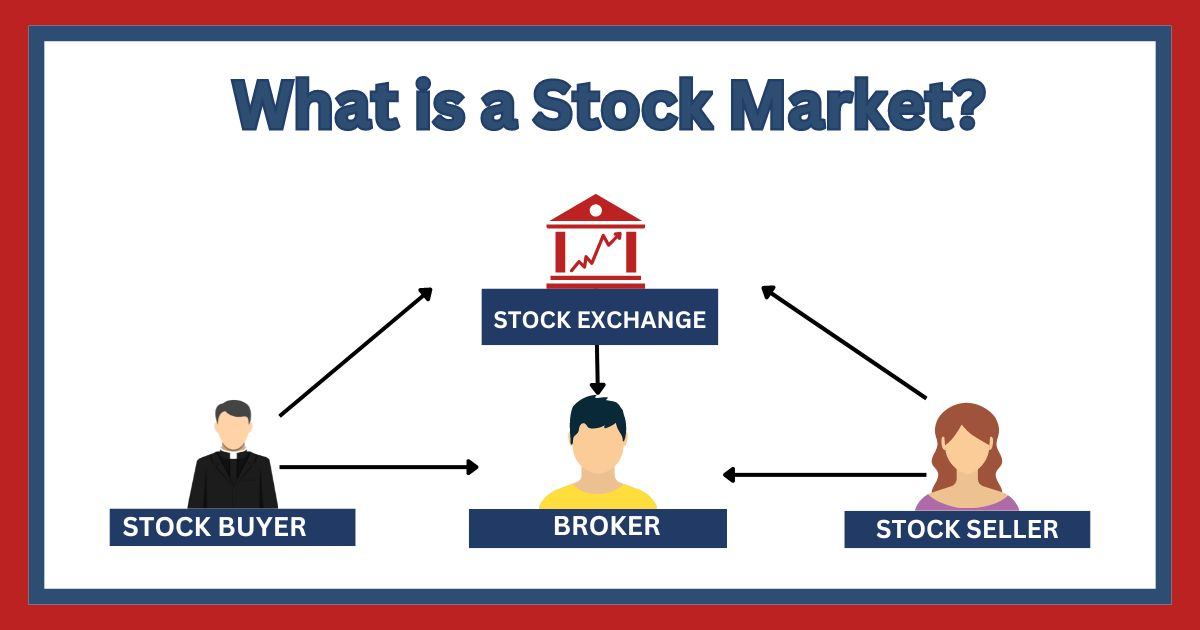
The Indian market has recently been dealing with pressure from foreign fund outflows, elevated crude oil prices, and broader global uncertainty. At the same time, domestic institutional buying and selective strength in some sectors and mid- and small-cap stocks have provided support.
Market Indicator | Current Trend |
|---|---|
Nifty 50 | Around 22,700 |
Sensex | Around 72,600 |
Foreign Institutional Investors (FII) | Selling pressure |
Domestic Institutional Investors (DII) | Providing support through buying |
Mid & Small Caps | Selective buying |
Crude Oil | Around $103–104/barrel |
Overall Market | Mixed and selective |
The important point is that the market is not moving in one direction across every stock and sector. Investors are seeing rotation and selective buying rather than broad-based strength.
5 Stock Market Trends Every Investor Should Know
1. FII Selling Is Putting Pressure on the Market
Foreign Institutional Investors, or FIIs, are major participants in the Indian stock market. Their buying and selling activity can influence overall market sentiment.
Recent data shows continued foreign selling pressure. According to Groww's FII/DII data, FIIs sold around ₹9,980 crore on September 29, while DIIs bought around ₹6,953 crore.
This difference is important because domestic institutional buying can help absorb some of the selling pressure from foreign investors.
What I Take From This
I don't look at FII selling as a signal to react immediately. Instead, I see it as something that can explain why the broader market may remain under pressure even when some individual stocks are performing well.
2. Mid-Cap and Small-Cap Stocks Are Showing Selective Strength
While the broader market has faced pressure, mid-cap and small-cap stocks have continued to attract buying interest in parts of the market.
Recent market movement showed mid- and small-cap indices gaining around 0.7%, even as the overall market remained volatile.
What This Means
Different parts of the market can behave differently at the same time.
A strong large-cap index does not automatically mean every stock is rising, and a weak index does not mean every stock is falling.
3. Crude Oil Prices Remain an Important Factor
Crude oil is another important trend for investors to watch, especially in the Indian market. Brent crude has recently been trading around $103–104 per barrel, and higher oil prices can have a wider impact because India imports a large amount of its crude oil.
This is why crude oil is not only a commodity-market story—it can also affect businesses, industries, and the broader stock market.
4. Sector Rotation Matters
Not every sector moves in the same direction at the same time. On some days, financial stocks (opens in a new tab) may attract buying while technology stocks remain under pressure, while on other days, energy or industrial stocks may lead the market.
This movement of money between different sectors is known as sector rotation. Instead of looking only at whether the overall market is rising or falling, it can be useful to look at which sectors are gaining, which are losing, whether the movement is broad-based or concentrated in a few stocks, and what factors may be driving the change.
Looking at these details can provide a clearer picture of what is happening beneath the headline index numbers.
5. Market Volatility Makes Patience More Important
When markets are volatile, prices can move quickly in both directions.
For example, a stock may rise strongly during one session and give back part of those gains later. Short-term movements can be influenced by news, institutional flows, global markets and investor sentiment.
This is why a single day's gain or loss should not automatically be treated as a long-term trend.
What I Watch When Following the Market
When I check the market, I prefer to look at several indicators instead of focusing on just one number.
What I Watch | Why It Matters |
|---|---|
Nifty & Sensex | Shows broad market direction |
FII/DII activity | Helps understand institutional flows |
Sector performance | Shows where money is moving |
Mid & small caps | Shows activity beyond large companies |
Crude oil | Can affect inflation and business costs |
Global markets | Indian markets can react to global sentiment |
Company results | Helps understand business performance |
This approach makes market analysis more structured and less dependent on headlines.
How to Use the Stock Market
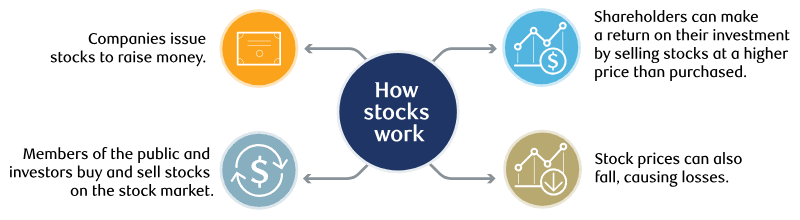
The stock market isn't only about buying and selling shares. It can be used for building long-term wealth, participating in business growth, understanding market trends, and learning how the economy works.
The right approach depends on your goal, time horizon, and risk tolerance.
1. Build for the Long Term
Long-term investing is about giving good businesses time to grow.
Instead of reacting to every daily price movement, investors generally focus on the health and future potential of a business.
What to Look At
Area | What It Tells You |
|---|---|
Revenue | Is the business growing? |
Profit | Is the company becoming more profitable? |
Debt | How much does the company owe? |
Cash Flow | Is the business generating real cash? |
Business Model | How does the company make money? |
Competition | What makes the company different? |
Management | How is the business being run? |
Valuation | Is the current price reasonable compared with the business? |
The key idea: Don't judge a company only by its share price. Look at the business behind the stock.
2. Understand Short-Term Trading
Trading focuses more on price movements over shorter periods.
Traders often pay closer attention to market activity and changes in price rather than focusing primarily on a company's long-term growth.
Common Things Traders Watch
Price trends → Is the price moving upward or downward?
Trading volume → How actively is the stock being traded?
Support & resistance → Where has the price previously reacted?
Momentum → How strong is the current price movement?
Market news → What events could affect the price?
Technical indicators → What does the price data suggest?
Important: Short-term trading can involve substantial risk, especially when markets are volatile. A quick price move can work in either direction.
3. Use the Market as a Learning Tool
The stock market can also be a real-world classroom for understanding businesses and the economy.
When you follow different companies and sectors, you start seeing how economic changes can affect businesses.
Follow the Connections
Interest Rates
↓
Can influence borrowing costs and spending
Inflation
↓
Can affect consumer demand and company costs
Crude Oil Prices
↓
Can influence transportation and operating expenses
Consumer Demand
↓
Can affect company sales and revenue
Global Markets
↓
Can influence investor sentiment in India
This is what makes market analysis interesting: a stock price is often connected to a much bigger economic story.
Which Approach Are You Following?
Approach | Main Focus | Typical Time Horizon |
|---|---|---|
Long-Term Investing | Business growth & fundamentals | Years |
Short-Term Trading | Price & market movements | Shorter periods |
Market Learning | Economy & business trends | Ongoing |
There isn't a single way to use the stock market. The important part is understanding what you are trying to achieve before choosing an approach.
My Key Takeaway
For me, the most useful way to look at the stock market is to go beyond “Which stock is going up?”
A better question is:
“What is driving the movement, and what does it tell me about the business or the wider economy?”
That shift—from simply watching prices to understanding the reasons behind them—can make following the stock market much more meaningful.
What Benefits Can You Get From the Stock Market?
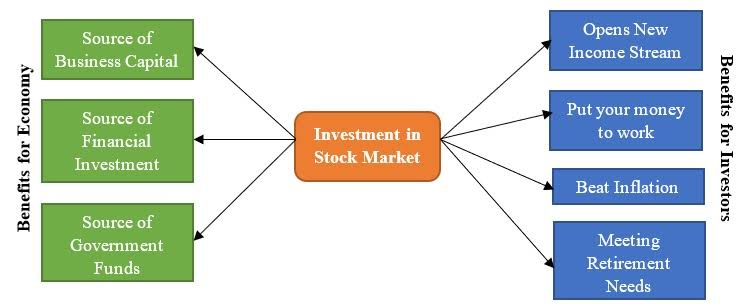
The stock market can provide several potential benefits, although returns are never guaranteed.
Potential Benefits
Wealth Creation
Investing over a long period can provide an opportunity for capital growth if the underlying investments perform well.
Business Ownership
Buying shares means owning a small portion of a publicly listed company.
Dividends
Some companies distribute part of their profits to shareholders through dividends.
Portfolio Diversification
Investors can spread investments across different companies, sectors or asset types rather than depending on one investment.
Financial Knowledge
Following companies and market trends can improve your understanding of businesses and the economy.
Before Investing: My Simple Checklist
Before considering any stock, I would look beyond its current price.
Question | What to Check |
|---|---|
Is the business growing? | Revenue and profit trends |
Is the company financially healthy? | Debt and cash flow |
Is the valuation reasonable? | Valuation metrics |
What is happening in the sector? | Industry trends |
What could affect the business? | Economic and company-specific risks |
What is my time horizon? | Short-term or long-term |
Can I handle the risk? | Possible losses and volatility |
A rising stock price alone doesn't tell you whether a company is financially strong.
Market prices change every day. Understanding why they change is what makes following the market more meaningful.
My Biggest Takeaway
The biggest lesson I take from following the stock market is that one number rarely tells the whole story.
The Nifty may be falling while certain sectors are gaining. FIIs may be selling while DIIs are buying. Large-cap stocks may be under pressure while some mid- and small-cap stocks continue to attract investors.
That's why understanding the trend behind the movement (opens in a new tab) can be more useful than simply checking whether the market is green or red.
The stock market can create opportunities for long-term wealth creation and financial learning, but it also involves risk. A better approach is to understand the market, research the businesses you are interested in, consider your time horizon, and avoid making decisions based only on short-term movements.
Want to Understand the Market Better?
The stock market becomes easier to follow when you look beyond daily price movements and understand what is driving them.
Keep track of market trends, study company performance, follow sector movements, and stay informed about the economic factors that can influence prices.
Stay informed. Follow the trends. Understand the market before making financial decisions.
Market Data Note
The market figures and institutional-flow numbers mentioned in this article are based on recent market data and may change throughout the trading session. Always check the latest exchange or reliable market-data source before making any financial decision.
Disclaimer: This article is for educational and informational purposes only and should not be considered financial or investment advice.