

Investing in the stock market can feel confusing, especially when there are so many options to choose from. Stocks, mutual funds, bonds, and other investment products all have their own features. Among these options, Exchange-Traded Funds (ETFs) (opens in a new tab) have become a popular choice for people who want to invest in different assets without purchasing each one separately.
ETFs are useful because they bring multiple investments together in a single fund. Instead of buying shares of several companies individually, investors can purchase one ETF that tracks a group of stocks, bonds, or other assets.
However, not all ETFs work in the same way. Some focus on large companies, while others follow specific industries, market indices, bonds, or commodities. Understanding these differences can make it easier to choose an investment that matches your financial goals.
Let's explore the different types of ETFs and what investors should know about each one.
What Are ETFs?
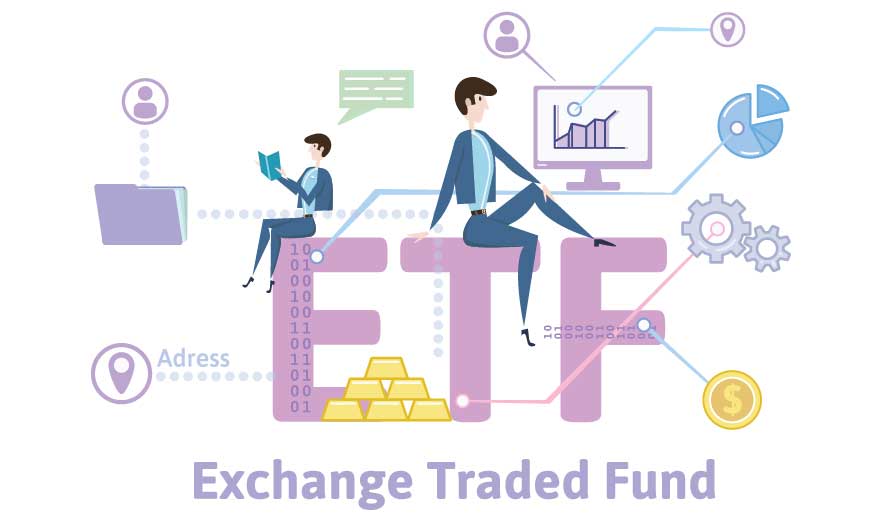
An Exchange-Traded Fund (ETF) is an investment fund that holds a collection of assets, such as stocks, bonds, or commodities. Its shares are traded on a stock exchange, just like individual company shares.
The biggest advantage is convenience. Investors can gain exposure to several investments through a single product rather than purchasing every asset separately.
For example, an ETF tracking a major stock market index may hold shares of many companies included in that index. When investors purchase that ETF, they get exposure to a collection of those companies.
How Do ETFs Work?
ETFs collect money from investors and use it to purchase or track a group of underlying assets. Their units are listed on stock exchanges, where investors can buy and sell them during market trading hours.
Here is how the process generally works:
An ETF follows a particular investment strategy or market index.
The fund holds or tracks a collection of underlying assets.
Investors purchase ETF units through a trading account.
The ETF's market price changes throughout the trading day.
Its performance depends on the assets or index it tracks, along with fees and tracking differences.
Different Types of ETFs Every Investor Should Know
ETFs come in different categories, and each serves a slightly different investment purpose. Some focus on long-term growth, while others provide exposure to bonds, specific industries, or international markets.
Let's look at the most common types.
1. Equity ETFs
Equity ETFs invest primarily in company shares. They allow investors to participate in the stock market without having to select individual companies themselves.
For example, an equity ETF may include shares of several large companies across different industries.
These ETFs are often considered by investors looking for long-term capital growth, although their value can rise or fall with the stock market.
Key features:
Invest mainly in company stocks.
Offer exposure to multiple businesses.
Can focus on large-cap, mid-cap, or small-cap companies.
May provide diversification across industries.
Who may consider them?
Investors who want stock market exposure through a single investment product may find equity ETFs worth exploring.
2. Index ETFs
Index ETFs are designed to follow the performance of a particular market index. Instead of trying to outperform the market through frequent buying and selling, these funds generally aim to match the index they track.
For example, an index ETF may follow the Nifty 50 or Sensex in India.
When the tracked index changes, the ETF's holdings are generally adjusted to reflect those changes.
Key features:
Track a specific market index.
Usually follow a passive investment approach.
Offer exposure to several companies.
Generally have lower management costs than many actively managed funds.
Why do investors choose them?
Index ETFs provide a straightforward way to participate in the broader market without researching and purchasing every company individually.
3. Bond ETFs
Bond ETFs invest in fixed-income securities rather than company shares. Their holdings may include government bonds, corporate bonds, and other debt instruments.
These ETFs are often considered by investors who want exposure to fixed-income investments and may prefer a different risk profile from stock-focused funds.
However, bond ETFs are not completely risk-free. Changes in interest rates and the credit quality of the underlying bonds can affect their value.
Key features:
Invest in different types of bonds.
May provide regular income distributions.
Can offer exposure to government and corporate debt.
Are affected by interest rates and credit risks.
Who may consider them?
Investors looking to add fixed-income exposure to a diversified portfolio may explore bond ETFs.
4. Sector ETFs
Sector ETFs focus on a particular industry instead of covering the entire stock market.
For example, an investor interested in technology companies can explore a technology-focused ETF. Similarly, healthcare, banking, energy, and real estate are other common sector categories.
These ETFs make it easier to invest in an industry without selecting individual businesses.
Popular sector ETF categories:
Technology ETFs
Healthcare ETFs
Banking and financial ETFs
Energy ETFs
Consumer goods ETFs
Real estate ETFs
Things to remember:
Sector ETFs can offer growth opportunities when a particular industry performs well. However, they may also carry higher concentration risk because their investments are limited to a specific area of the economy.
5. Commodity ETFs
Commodity ETFs provide exposure to commodities such as gold, silver, oil, and other raw materials.
Instead of purchasing and storing physical commodities, investors can use certain commodity ETFs to participate in price movements. However, the structure differs between funds. Some hold physical commodities, while others use futures contracts or related instruments.
Key features:
Provide exposure to commodity markets.
May help diversify a portfolio.
Can be influenced by global demand and supply.
Prices may change due to inflation, economic conditions, and geopolitical events.
Example:
Gold ETFs are a familiar example. They allow investors to gain exposure to gold prices without personally storing physical gold.
6. International ETFs
International ETFs invest in companies or markets outside an investor's home country.
For example, an investor based in India may use an international ETF to gain exposure to companies listed in the United States, Europe, or other global markets.
These funds can help investors explore opportunities beyond their domestic stock market.
Key features:
Provide access to overseas markets.
May invest in one country or several regions.
Offer geographical diversification.
Can involve currency and international market risks.
Before investing, it is important to understand currency fluctuations, foreign market regulations, and applicable taxation.
7. Dividend ETFs
Dividend ETFs focus on companies that regularly distribute a portion of their earnings to shareholders.
These funds generally select businesses based on dividend-related factors, such as dividend history, yield, or consistency.
They may appeal to investors who want exposure to dividend-paying companies without choosing each stock individually.
Key features:
Focus on dividend-paying businesses.
May provide periodic income distributions.
Can include companies from different industries.
Dividend payments are not guaranteed.
Investors should also look beyond dividend yield and consider the financial health of the companies held by the fund.
8. Real Estate ETFs
Real estate ETFs provide exposure to the property sector through investments such as Real Estate Investment Trusts (REITs) and real estate-related companies.
They allow investors to participate in parts of the property market without directly purchasing buildings or land.
Key features:
Focus on real estate-related businesses.
May include REITs and property companies.
Can provide exposure to commercial and residential property markets.
Are affected by interest rates and property market conditions.
These ETFs may be worth researching for investors interested in real estate exposure through the stock market.
9. Small-Cap and Mid-Cap ETFs
Small-cap and mid-cap ETFs invest in companies based on their market capitalisation.
Small-cap ETFs focus on smaller publicly listed companies, while mid-cap ETFs focus on medium-sized businesses.
These companies may have room to expand, but they can also experience greater price fluctuations than larger, established businesses.
Key features:
Small-cap ETFs invest in smaller companies.
Mid-cap ETFs focus on medium-sized companies.
Both provide exposure to specific market-cap segments.
They may carry higher volatility and liquidity risks.
Investors should consider their risk tolerance before choosing these categories.
10. Thematic ETFs
Thematic ETFs focus on long-term trends or specific investment themes rather than following a traditional industry classification.
For example, a thematic ETF may invest in businesses connected to artificial intelligence, electric vehicles, clean energy, cybersecurity, or robotics.
These funds allow investors to explore emerging industries through a single investment.
Key features:
Focus on a particular investment theme.
May include companies from different industries.
Can offer exposure to emerging technologies.
May carry concentration and valuation risks.
A popular theme does not automatically make an ETF a good investment. Investors should understand the fund's holdings and investment strategy before investing.
11. Actively Managed ETFs
Unlike traditional index ETFs, actively managed ETFs are managed by professional fund managers who make investment decisions based on research, market conditions, and the fund's objectives.
Their goal may be to outperform a benchmark or achieve a particular investment outcome.
Key features:
Fund managers actively select investments.
Holdings may change based on market conditions.
Management fees can be higher than those of passive ETFs.
Performance depends on the manager's decisions and investment strategy.
These ETFs may appeal to investors who prefer professional management rather than simply following an index.
12. Inverse and Leveraged ETFs
Inverse and leveraged ETFs are more specialised investment products. They are generally designed for experienced investors who understand short-term market movements and the risks involved.
Inverse ETFs: These aim to deliver the opposite of the daily performance of a particular index or benchmark.
Leveraged ETFs: These aim to deliver a multiple of the daily performance of an underlying index or benchmark.
For example, a 2x leveraged ETF may aim to deliver twice the daily return of its benchmark before fees and expenses.
Important risks:
Daily returns can differ significantly from longer-term expectations.
Compounding can affect performance over time.
Losses can happen quickly.
These products may not be suitable for long-term buy-and-hold investors.
Beginners should understand these products carefully before considering them.
Quick Comparison of Different ETF Types
The following table makes it easier to understand how different ETFs serve different investment purposes.
ETF Type | Main Investment Focus | General Purpose |
Equity ETFs | Company stocks | Stock market exposure |
Index ETFs | Market indices | Follow market performance |
Bond ETFs | Government and corporate bonds | Fixed-income exposure |
Sector ETFs | Specific industries | Industry-focused investing |
Commodity ETFs | Gold, silver, and other commodities | Commodity exposure |
International ETFs | Foreign markets | Global diversification |
Dividend ETFs | Dividend-paying companies | Dividend income exposure |
Real Estate ETFs | REITs and property companies | Real estate exposure |
Small-Cap ETFs | Smaller companies | Small-company exposure |
Mid-Cap ETFs | Medium-sized companies | Mid-sized company exposure |
Thematic ETFs | Specific investment themes | Exposure to emerging trends |
Active ETFs | Manager-selected assets | Active investment management |
Benefits of Investing in ETFs
ETFs have become popular because they offer a convenient way to access different markets. However, their benefits depend on the type of fund, its holdings, and the investor's financial goals.
Here are some advantages worth understanding.
1. Diversification
One ETF can hold multiple stocks, bonds, or other assets. This helps investors spread their money across different investments instead of depending on a single company.
However, diversification does not eliminate market risk.
2. Easy Buying and Selling
Most exchange-traded funds can be bought and sold through a trading account during market hours, just like regular shares.
Investors can also monitor their market prices throughout the trading session.
3. Investment Flexibility
There are ETFs for different investment preferences, including equity, bonds, commodities, industries, and international markets.
This variety makes it easier to explore different investment strategies.
4. Cost Transparency
Most ETFs disclose their holdings regularly, allowing investors to understand what they own.
Their expense ratios also help investors compare ongoing fund management costs.
5. Accessibility
Investors can gain exposure to a collection of assets without buying every underlying investment separately.
This makes ETFs a convenient option for people who want a simpler way to participate in financial markets.
Risks to Understand Before Investing in ETFs
Although ETFs offer several advantages, they are not completely safe or guaranteed investments. Their value can fluctuate depending on market conditions and the assets they hold.
Here are some important risks to consider:
Market Risk: ETF prices can fall when the underlying market or investments decline.
Liquidity Risk: Some ETFs have lower trading volumes, making buying or selling at a desired price more difficult.
Tracking Error: An ETF may not perfectly match the performance of its underlying index.
Currency Risk: International ETFs can be affected by exchange rate movements.
Concentration Risk: Sector and thematic ETFs may depend heavily on a limited group of companies.
Interest Rate Risk: Bond ETF prices can change when interest rates move.
Management Fees: Ongoing expenses can reduce investment returns over time.
Understanding these risks can help investors make more informed decisions.
How to Choose the Right ETF for Your Investment Goals
Choosing an ETF should not be based only on popularity or recent performance. The right option depends on what you want to achieve and how much risk you are comfortable taking.
Consider these points before investing.
1. Understand Your Financial Goals
Start by deciding why you want to invest. Are you looking for long-term growth, dividend income, fixed-income exposure, or international diversification?
Your objective can help narrow down the available ETF categories.
2. Check the Expense Ratio
The expense ratio represents the annual operating cost of a fund as a percentage of its assets.
Even small differences in fees can affect returns over a long investment period.
3. Review the Underlying Holdings
Always check what an ETF actually invests in. Two funds may have similar names but hold different companies or assets.
Looking at their holdings can help you understand the exposure you are taking.
4. Check Trading Volume and Liquidity
An ETF with better trading activity may offer easier buying and selling.
Also, compare its bid-ask spread because wider spreads can increase trading costs.
5. Understand the Fund's Risks
Every ETF has a different risk profile. Equity, commodity, international, and leveraged ETFs do not behave in the same way.
Choose a fund only after understanding its investment strategy and potential losses.
6. Compare Long-Term Performance
Past performance can provide useful information, but it does not guarantee future returns.
Compare the ETF with its benchmark and other similar funds while considering fees and tracking differences.
ETFs vs Mutual Funds: What Is the Difference?
ETFs and mutual funds both allow investors to invest in a collection of assets. However, they differ in how they are traded and priced.
Comparison | ETFs | Mutual Funds |
Trading | Traded on stock exchanges | Usually purchased or redeemed through the fund |
Pricing | Changes during market hours | Generally priced once daily at NAV |
Minimum Investment | Depends on unit price and broker | Depends on fund rules |
Management | Can be active or passive | Can be active or passive |
Transparency | Holdings are often disclosed frequently | Disclosure frequency varies |
Flexibility | Can be traded during market hours | Transactions follow fund cut-off rules |
Neither option is automatically better. The right choice depends on investment preferences, costs, convenience, and financial goals.
Common ETF Investing Mistakes to Avoid
Many investors focus only on returns and overlook other important details. A little research before investing can help prevent unnecessary mistakes.
Watch out for these common errors:
Buying an ETF without understanding its holdings.
Choosing a fund only because it recently performed well.
Ignoring the expense ratio and other costs.
Overlooking liquidity and trading volume.
Investing in too many ETFs with overlapping holdings.
Taking unnecessary risks with leveraged or inverse ETFs.
Expecting guaranteed returns or regular income.
Ignoring the impact of taxes and currency movements.
A sensible investment decision starts with understanding what you are buying, not simply following market trends.
ETFs offer investors a practical way to explore different areas of the financial market through a single investment product. From equity and index ETFs to bonds, commodities, and international funds, there are options for different investment preferences and financial objectives.
However, every ETF comes with its own costs, risks, and investment strategy. A fund that works well for one investor may not be suitable for someone else.
Before investing, take time to understand the fund's holdings, expense ratio, liquidity, and risk level. Rather than choosing an ETF just because it is popular, focus on how it fits into your overall investment plan.
A little research today can help you make more confident investment decisions tomorrow.