
Managing several debts at once can feel exhausting. One credit card bill is due this week, another payment is coming up next week, and a personal loan has its own monthly deadline. Add different interest rates and minimum payments to the mix, and it becomes easy to feel overwhelmed.
This is where debt consolidation may help. It allows you to combine multiple debts into one new loan or, in some cases, move credit card balances to a balance transfer card. Instead of keeping track of several payments, you may be able to manage just one.
But there is one important question: How does debt consolidation affect your credit score?
The honest answer is that it can affect your credit (opens in a new tab) in both positive and negative ways. You might notice a small, temporary drop at first, while responsible repayments may help your credit score improve over time. The result depends on the consolidation method you choose and how you manage your money afterward.
What Is Debt Consolidation?
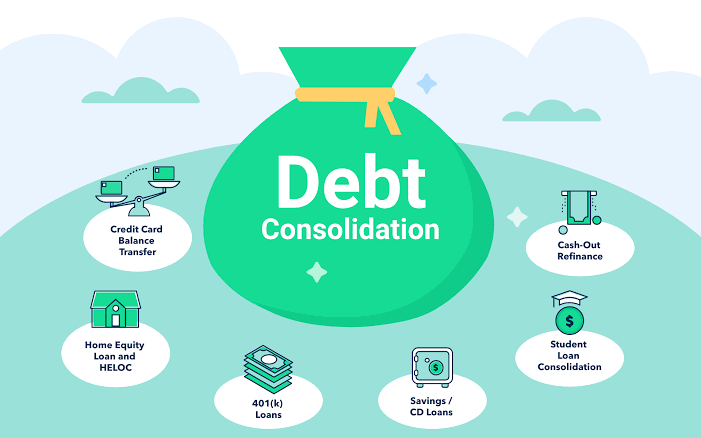
Debt consolidation (opens in a new tab)means combining multiple debts into a single repayment arrangement. It is commonly used for credit card balances, personal loans, and other eligible debts.
For example, imagine you have three credit card balances and a personal loan. Each has a different interest rate and due date. A debt consolidation loan could be used to pay off those balances, leaving you with one new loan and one monthly payment.
The goal is to make repayment easier, and potentially reduce interest costs. However, consolidation does not make the debt disappear. You still owe the money, and the new loan must be repaid according to its terms.
Common ways to consolidate debt
Debt consolidation loan: Take out a new loan to pay off several existing debts.
Balance transfer credit card: Move eligible credit card balances to another card, sometimes with a promotional interest rate for a limited period.
Home equity loan or line of credit: Eligible homeowners may use their home equity to consolidate certain debts, but their home could be at risk if they fail to repay.
Debt management plan: Work with a credit counselling organisation to arrange a structured repayment plan. This is not the same as taking out a new consolidation loan.
Each option has different fees, eligibility requirements, repayment terms, and risks. Comparing the total cost is just as important as comparing the monthly payment.
How Debt Consolidation Can Change Your Credit Score
Your credit score is influenced by several factors, including payment history, credit utilisation, the age of your accounts, and applications for new credit. Debt consolidation can affect some of these factors almost immediately, while others change gradually.
Let's look at what can happen.
1. Your Credit Score May Drop at First
Applying for a debt consolidation loan or balance transfer credit card usually involves a hard credit inquiry. This happens when a lender checks your credit report to assess your application.
A hard inquiry can lower your credit score temporarily. Opening a new account may also reduce the average age of your credit accounts, which can affect some scoring models.
The good news is that a single inquiry generally has a limited effect. It does not automatically mean your credit score will suffer for a long time.
What you can do: Compare loan offers and fees before applying. Where available, use a lender's prequalification process that relies on a soft inquiry, and confirm whether it affects your credit score before proceeding.
2. On-Time Payments May Help You Build Better Credit
Payment history is an important part of most credit scoring models. Consistently paying bills on time can help establish a positive credit history.
Debt consolidation may make this easier because you have fewer payment dates to remember. Instead of managing four different bills, you might have just one monthly instalment.
However, this benefit only works if you make the new payment on time. Missing a payment on your consolidation loan can hurt your credit score, even if you previously paid off several credit cards.
A simple habit that helps: Set up payment reminders or automatic payments, and make sure enough money is available in your account before the due date.
3. Your Credit Utilisation May Improve
Credit utilisation is the portion of your available revolving credit that you are using. It is especially relevant to credit card balances.
For example, if your total credit card limit is $10,000 and your outstanding balance is $7,000, your utilisation is 70%.
If a consolidation loan pays off those card balances, your credit card utilisation may decrease significantly, provided you do not build up new balances. That change may help your credit score.
However, transferring balances to another credit card can produce a different result. If the new card has a low limit and receives a large balance, its utilisation may be high.
The outcome depends on your credit limits, outstanding balances, and the method you use.
4. Your Credit History May Be Affected
Opening a new loan or card adds a new account to your credit profile. Since that account is new, it may reduce the average age of your accounts.
A longer history of well-managed credit can help in some scoring models, so this change may have a negative effect at first.
On the other hand, paying off existing debts and maintaining a consistent repayment record can support your credit health over time. You do not need to open several new accounts to improve your credit mix.
5. Your Credit Score Could Improve Over Time
Debt consolidation may support your credit score over the longer term if it helps you pay your debts on time, reduce credit card balances, and avoid taking on additional debt.
Think of it as creating a more manageable repayment routine. The new loan itself does not guarantee a higher score. What matters most is what happens after consolidation.
If you keep borrowing on cards that you have just paid off, you could end up with both the consolidation loan and fresh credit card debt. That can make your financial situation worse.
Debt Consolidation: Positive and Negative Effects Compared
The impact is not the same for everyone. Here is a simple comparison of the possible benefits and drawbacks.
Credit factor | How it may help | How it may hurt |
Payment history | One manageable payment may be easier to pay on time | A missed new loan payment can damage your credit |
Credit utilisation | Paying off card balances may lower utilisation | A heavily used balance transfer card may have high utilisation |
Credit inquiries | The impact of one inquiry is generally limited | A hard inquiry may cause a temporary score drop |
Account age | Older accounts may continue contributing to credit history if kept open | Opening a new account may lower average account age |
Total debt | A clear repayment plan can help you reduce debt | Reusing paid-off cards may increase your total debt |
Interest costs | A lower rate may make repayment less expensive | Fees or a longer term may increase the total cost |
The key point is simple: debt consolidation is a financial tool, not an instant credit score fix. Its results depend on the terms of the arrangement and your repayment habits.
A Simple Example of Debt Consolidation
Imagine someone has three credit card balances and wants to make repayment easier.
Debt | Outstanding balance | Interest rate |
Credit Card A | $2,000 | 24% |
Credit Card B | $1,500 | 21% |
Credit Card C | $1,500 | 19% |
Total | $5,000 | — |
Suppose the person qualifies for a $5,000 consolidation loan at a lower interest rate than the cards. They use the loan to pay off the balances and then make one monthly payment toward the new loan.
This could make the debt easier to manage and potentially reduce interest costs. The actual savings would depend on the new interest rate, loan term, fees, and repayment schedule.
The credit score might dip temporarily because of the application and new account. If the person makes payments on time and avoids running up the old cards again, their credit profile may improve over time.
This is only an illustration, not a guaranteed result. A consolidation loan is worthwhile only when its full terms suit your financial situation.
Debt Consolidation Loan vs. Balance Transfer Card
Both options can help combine debt, but they work differently.
Feature | Debt consolidation loan | Balance transfer card |
How it works | A loan pays off existing eligible debts | Eligible card balances move to another credit card |
Repayment | Usually fixed instalments over a set term | Payments depend on the card agreement and outstanding balance |
Interest | May offer a lower rate than existing debts | May offer a promotional rate for a limited period |
Potential credit impact | Hard inquiry and a new loan account may affect your score | Hard inquiry and high utilisation on the new card may affect your score |
Main risk | Fees, higher total interest, or an unaffordable payment | Transfer fees and interest after the promotional period ends |
Before choosing either option, check the annual percentage rate (APR), fees, repayment period, and any promotional conditions. A lower monthly payment is not always a sign that you will pay less overall.
When Does Debt Consolidation Make Sense?
Debt consolidation may be worth considering if you have several high-interest debts and want a clearer way to repay them.
It may be useful when:
You qualify for a lower interest rate than the rates on your current debts.
The new monthly payment fits comfortably within your budget.
You want to simplify several due dates into one.
You have a realistic plan to stop adding unnecessary debt.
You understand the fees, repayment terms, and total amount you will pay.
It may be less suitable if the new loan has a high interest rate, the fees cancel out any savings, or the repayment term means you will pay more interest overall.
Be particularly careful with loans secured against your home. Falling behind on a secured loan can put the property at risk.
Practical Tips to Protect Your Credit Score
You do not need a complicated financial strategy to start making progress. A few consistent habits can help you manage debt more confidently.
1. Check the full cost before applying
Do not compare loans based only on their advertised interest rates. Review the APR, origination fees, balance transfer fees, late-payment charges, and repayment term.
2. Avoid making too many credit applications
Research your options before submitting formal applications. Multiple hard inquiries can affect your score, although scoring models may treat certain rate-shopping inquiries differently.
3. Keep payments on schedule
Set reminders or automatic payments if they suit your circumstances. Always check that the money is available when the payment is due.
4. Avoid building up fresh card balances
Paying off credit cards through consolidation can feel like a fresh start. Try not to treat the cleared credit limits as extra spending money.
5. Keep track of the accounts you pay off
After consolidation, check that the original creditors have received the payments and that the account balances are reported accurately. Continue making any required payments until each creditor confirms the balance has been cleared.
6. Review your credit reports
Check your credit reports for errors, unexpected accounts, and incorrect payment information. Monitoring your reports can help you spot problems early.
7. Give your repayment plan time
Credit scores do not necessarily improve immediately. Focus on reducing debt, paying on time, and avoiding unnecessary borrowing rather than checking for a score increase every few days.
Common Mistakes to Avoid
Debt consolidation can become less helpful when the repayment plan is not supported by healthy financial habits.
Watch out for these common mistakes:
Choosing a loan without comparing fees: A low advertised rate may not mean a lower total cost.
Focusing only on the monthly payment: A longer repayment term can mean paying more interest overall.
Using paid-off cards for new purchases: This may leave you managing the consolidation loan and fresh card balances at the same time.
Missing payments during the transition: Keep track of old accounts until the debts are fully paid.
Assuming consolidation guarantees better credit: No method can promise a specific score increase.
Ignoring financial difficulties: If payments are already unaffordable, consider speaking with a reputable nonprofit credit counselling organisation about your options.
Frequently Overlooked Details
Before signing a consolidation agreement, make sure you understand a few important points.
Debt consolidation is not debt forgiveness. You are still responsible for repaying the amount borrowed.
Closing a credit card is not always necessary. Consider the effect on available credit, account history, spending habits, and any fees before deciding.
A lower interest rate is not the only factor. Fees and the length of the loan can change the total cost.
Results differ by person. Credit scoring systems, credit reports, loan products, and individual circumstances all matter.
Taking time to understand these details can help you avoid surprises and choose a repayment method that fits your budget.
Debt consolidation can change your credit score in several ways. Applying for a new loan or balance transfer card may cause a temporary dip, while reducing credit card balances and making consistent on-time payments may help your credit profile improve over time.
The most important thing is to look beyond the initial score change. Compare the total repayment cost, choose a payment you can realistically afford, and avoid building up new debt after clearing your existing balances.
When used thoughtfully, debt consolidation can make repayment more organised and manageable. The real progress comes from sticking to the plan, paying on time, and steadily working toward becoming debt-free.