
The Indian stock market continues to attract investor attention as benchmark indices demonstrate positive momentum amid changing domestic and international economic conditions. The Sensex crossed the 81,106 level, while the Nifty 50 hovered around the 25,000–25,250 range, reflecting improved market sentiment and renewed buying interest.
The reported upward movement highlights the growing importance of domestic institutional participation, sectoral performance, and investor confidence in India's financial markets. Despite global economic uncertainties, domestic buying activity has helped support the recovery in major equity indices.
For investors, understanding these market movements is important because stock prices are influenced by several interconnected factors, including economic growth, corporate earnings, inflation, interest rates, and international investment flows.
The Indian stock market also reflects changing expectations about the country's economic outlook. As businesses expand and financial activity develops, investors continue to evaluate opportunities across banking, technology, automobiles, energy, infrastructure, and other sectors.
Let's understand the factors behind the market movement, the role of institutional investors, and what market participants should watch in the coming trading sessions.
1. Sensex Crosses 81,106: Understanding the Market Movement
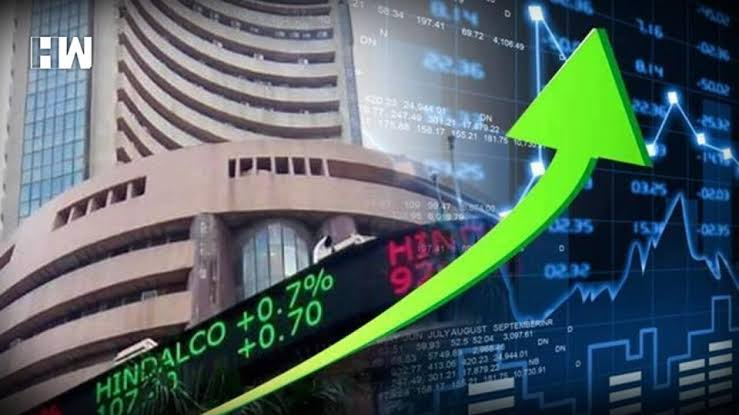
The BSE Sensex is one of India's most widely followed stock market indices. It tracks the performance of 30 major companies listed on the Bombay Stock Exchange and provides an overview of large-cap market performance.
Crossing the 81,106 level represents an important psychological and technical development in the reported market session. Such movements can attract additional attention from retail investors, institutional participants, and market analysts.
A positive movement in the Sensex may indicate improving confidence in leading companies. However, investors should also examine whether the rally is supported by broad-based participation or concentrated in a few heavyweight stocks.
Some important factors influencing the Sensex include:
Performance of major banking and financial companies.
Buying interest in large-cap stocks.
Domestic institutional investment activity.
Corporate earnings and business growth expectations.
Global economic developments and foreign investment trends.
A sustained upward movement generally requires consistent buying interest and supportive economic conditions rather than a temporary increase in market activity.
2. Nifty 50 Moves Around 25,000–25,250 Levels
The Nifty 50 is another important benchmark that represents 50 major companies across different sectors of the Indian economy.
The reported movement around 25,000–25,250 reflects investor attention towards an important market range. These levels can become useful reference points when traders and analysts evaluate market momentum.
The Nifty includes companies from banking, information technology, energy, automobiles, pharmaceuticals, consumer goods, and other industries.
When several major sectors perform positively together, the index may receive broader support. However, weakness in heavyweight stocks can also affect the overall index even when smaller companies perform well.
Important Nifty Market Levels
Market Factor | Reported Level | Importance | What Investors Should Watch |
|---|---|---|---|
Nifty 50 | 25,000 | Psychological level | Buying and selling activity |
Upper Range | 25,250 | Near-term reference | Strength of upward momentum |
Sensex | 81,106 | Reported market milestone | Large-cap performance |
Market Sentiment | Positive | Indicates improved confidence | Sustainability of the rally |
These figures represent the market snapshot supplied for this article, not independently verified live quotations.
3. Domestic Institutional Investors Support Market Sentiment
Domestic institutional investors, commonly known as DIIs, play an important role in India's equity market.
These investors include mutual funds, insurance companies, banks, pension funds, and other domestic financial institutions. Their investments can influence market liquidity and help support demand for listed companies.
Strong domestic participation can become particularly important when foreign investors reduce their exposure to Indian equities.
For example, consistent mutual fund inflows through systematic investment plans (SIPs) can provide a source of domestic investment demand. Insurance companies and other institutions may also adjust their portfolios according to market valuations and economic expectations.
Why Institutional Participation Matters
Market liquidity: Institutional transactions can increase trading activity.
Investor confidence: Strong buying interest may improve overall sentiment.
Long-term investment: Domestic institutions often evaluate companies based on financial performance and growth potential.
Market stability: Domestic investment flows can help balance periods of foreign selling.
However, institutional buying does not guarantee that the market will continue rising. Investors should monitor both buying and selling data before drawing conclusions.
4. Global Market Conditions Continue to Influence Indian Stocks
Although domestic demand can support Indian equities, international developments remain important for market direction.
India is connected to global financial markets through trade, foreign investment, currency movements, and energy imports. As a result, international economic developments can influence domestic stock prices.
Some of the major global factors include:
US Federal Reserve Interest Rates
Changes in US interest rates can influence global investment flows. Higher interest rates may encourage investors to move money towards dollar-based assets, while expectations of lower rates can improve interest in emerging markets.
Crude Oil Prices
India imports a significant portion of its crude oil requirements. Higher oil prices can increase transportation expenses, production costs, and inflationary pressure.
Lower crude oil prices may provide relief to several industries, including aviation, transportation, paints, and manufacturing.
Foreign Institutional Investment
Foreign Institutional Investors (FIIs) monitor global economic conditions, currency movements, interest rates, and company valuations before allocating money to Indian markets.
Their buying and selling activity can influence short-term market direction.
Geopolitical Developments
International conflicts, trade restrictions, supply-chain disruptions, and political uncertainty can increase market volatility.
Investors should therefore consider global developments alongside domestic economic indicators.
5. Banking and Financial Stocks Remain Important
Banking stocks have considerable influence on the performance of Indian benchmark indices.
Major financial institutions contribute to economic activity by providing loans, supporting businesses, managing deposits, and facilitating investments.
The performance of banking companies is closely connected to several economic indicators, including credit growth, interest rates, loan repayments, and asset quality.
Banking Indicator | Meaning | Market Importance | Investor Consideration |
|---|---|---|---|
Credit Growth | Increase in bank lending | Indicates borrowing demand | Business expansion |
Net Interest Margin | Difference between interest earned and paid | Reflects lending profitability | Earnings performance |
Asset Quality | Condition of outstanding loans | Highlights financial risk | Non-performing assets |
Deposit Growth | Increase in customer deposits | Supports lending capacity | Funding stability |
Investors following the market rally should monitor banking results and financial performance instead of relying only on index movements.
6. Sectors Investors Should Keep on Their Watchlist
A market rally can create opportunities across different industries, but not every sector performs equally. Some industries may benefit from economic growth, while others may face pressure from rising costs or changing demand.
The following sectors deserve attention when analysing Indian equity market trends.
Sector | Key Growth Driver | Important Indicator | Potential Risk |
|---|---|---|---|
Banking | Credit demand and financial activity | Loan growth | Rising bad loans |
Information Technology | Global technology spending | Revenue growth | International slowdown |
Automobiles | Consumer demand | Vehicle sales | Input costs |
Infrastructure | Government and private investment | Project execution | Delays and financing |
Pharmaceuticals | Healthcare demand | Export and domestic sales | Regulatory challenges |
Investors should evaluate individual companies within these sectors because industry-wide growth does not necessarily translate into better performance for every listed business.
7. What Should Investors Watch in the Coming Sessions?
The future direction of the Indian stock market may depend on several economic and financial developments.
Corporate earnings will remain important because company results provide information about revenue growth, profitability, operating expenses, and future business expectations.
Inflation and interest-rate developments can also influence investment decisions. If inflation remains under control, it may create a more supportive environment for economic activity and financial markets.
Other important factors include:
FII and DII buying and selling trends.
Quarterly corporate earnings.
Banking and financial sector performance.
International crude oil prices.
Rupee movement against the US dollar.
Global stock market performance.
Government policies and economic announcements.
Investors should also remember that stock markets move in both directions. A positive trading session does not automatically indicate a long-term upward trend.
8. Smart Investment Practices During a Market Rally
Market rallies often create excitement, but making investment decisions based only on rising indices can increase financial risk.
Investors should focus on their financial objectives, investment horizon, and ability to handle market fluctuations.
Here are some practical approaches:
Research before investing: Understand a company's financial statements, business model, and growth prospects.
Avoid chasing market momentum: Rapid price increases do not always indicate strong fundamentals.
Diversify investments: Consider spreading investments across different sectors and asset classes.
Monitor valuations: Compare share prices with earnings, business growth, and industry performance.
Maintain a long-term perspective: Short-term market fluctuations should not automatically change a well-planned investment strategy.
Review portfolio performance: Regularly assess whether investments remain aligned with financial goals.
A disciplined approach can help investors navigate uncertain market conditions more effectively.