

Both trading and long-term investing involve buying financial assets with the aim of generating returns. However, they differ in how investors make decisions, how often they buy and sell, and how much attention they must give to the market.
Trading focuses on taking advantage of short-term price movements. Traders may hold stocks for a few minutes, hours, days, or weeks. Their decisions often depend on price charts, market news, technical indicators, and trading volume.
Long-term investing focuses on owning assets for several years or even decades. Investors may choose individual companies based on their business fundamentals or invest in diversified index funds that track a market benchmark. Instead of reacting to every market movement, they aim to benefit from long-term growth.
Trading vs. Investing at a Glance
Comparison Factor | Active Trading | Index Investing | Value Investing |
|---|---|---|---|
Main Objective | Profit from short-term price changes | Track a market index over time | Buy undervalued businesses |
Holding Period | Minutes to weeks | Usually years | Usually years |
Time Commitment | High | Low to moderate | Moderate research initially |
Research Style | Charts, news, market movements | Index, fees, diversification | Financial statements and valuation |
Transaction Frequency | Frequent | Usually occasional | Occasional |
Compounding Potential | Can be interrupted by frequent withdrawals and costs | Benefits from long holding periods | Benefits from reinvested returns and business growth |
Tax Considerations | Frequent taxable sales may occur | Often fewer taxable sales in a taxable account | Tax may be deferred until investments are sold |
Main Challenge | Timing and emotional discipline | Staying invested through downturns | Identifying genuinely undervalued companies |
1. Time Commitment: How Much Attention Does Each Strategy Need?
Time is one of the biggest differences between trading and long-term investing. Your schedule, financial knowledge, and willingness to monitor the market can influence which approach is more practical.
Active Trading Requires Regular Monitoring

Active traders need to follow market movements and make decisions within specific time windows. Day traders may monitor price charts throughout market hours, while swing traders may review opportunities daily or several times a week.
Their work can include:
Studying price charts and technical indicators.
Following company announcements and economic news.
Identifying entry and exit points.
Setting stop-loss and profit targets.
Reviewing trades and maintaining records.
Monitoring market volatility and portfolio exposure.
Trading is not simply buying a stock when its price falls and selling when it rises. It requires a defined strategy, risk management, and the ability to accept losses.
Long-Term Investing Requires Patience
Long-term investors generally spend more time researching investments before buying them and less time making daily trading decisions.
An index investor might choose a diversified fund that tracks a benchmark and invest regularly. A value investor may study a company's earnings, debt, cash flow, management, and competitive position before purchasing its shares.
After building a portfolio, investors typically review it periodically rather than responding to every daily price movement.
Activity | Active Trader | Index Investor | Value Investor |
|---|---|---|---|
Market Monitoring | Frequent or daily | Occasional | Periodic |
Research Before Buying | Frequent | Fund and index research | Detailed company analysis |
Portfolio Review | Often daily | Monthly or quarterly | Quarterly or when needed |
Decision Speed | Often quick | Usually gradual | Research-driven |
Lifestyle Fit | Requires regular attention | More flexible | Suits patient researchers |
Important pointer: If you have limited time because of work, studies, or other responsibilities, a long-term approach may be easier to maintain. Active trading can demand considerably more attention than many beginners expect.
2. Tax Impact: How Trading Frequency Can Affect Your Returns
Taxes are an important part of investing because the amount you keep after tax matters more than the profit shown on a trading app.
Every time you sell an investment at a profit, you may create a taxable capital gain. The applicable treatment depends on the country, asset type, account, holding period, and local tax rules.
Tax Impact of Active Trading
Frequent traders may buy and sell assets multiple times within a short period. In taxable accounts, this can result in repeated realised gains and losses that need to be tracked and reported.
In the United States, the IRS generally classifies gains on assets held for one year or less as short-term capital gains. Assets held for more than one year generally qualify for long-term capital-gain treatment. Short-term gains are generally taxed at ordinary income tax rates, while long-term gains may qualify for different rates depending on the taxpayer's circumstances.
This means frequent buying and selling may create a larger tax-reporting workload and potentially reduce after-tax returns.
Tax Impact of Long-Term Investing
Long-term investors may have fewer taxable sales because they often hold investments for extended periods. In a US taxable account, holding an eligible asset for more than one year may qualify a realised gain for long-term capital-gain treatment.
Index funds can also have relatively low portfolio turnover because they generally follow a passive investment strategy. However, fund distributions, dividends, and other taxable events may still apply.
Tax Factor | Active Trading | Index Investing | Value Investing |
|---|---|---|---|
Selling Frequency | Often high | Usually low | Usually low |
Realised Gains | May occur frequently | Often deferred until sale | Often deferred until sale |
Tax Recordkeeping | More transactions to track | Generally simpler | Depends on portfolio activity |
Holding Period | Often short | Usually long | Usually long |
Potential Tax Efficiency | May be lower in taxable accounts | Can benefit from lower turnover | Can benefit from patient holding |
Important: These examples explain the general US distinction between short-term and long-term capital gains. Tax rules in India and other countries are different. Indian investors should check the latest rules for equity delivery, intraday trading, futures and options, mutual funds, and applicable securities transaction taxes with a qualified tax professional. Tax treatment can also differ between taxable and tax-advantaged accounts.
3. Compounding: Why Time Can Make a Difference
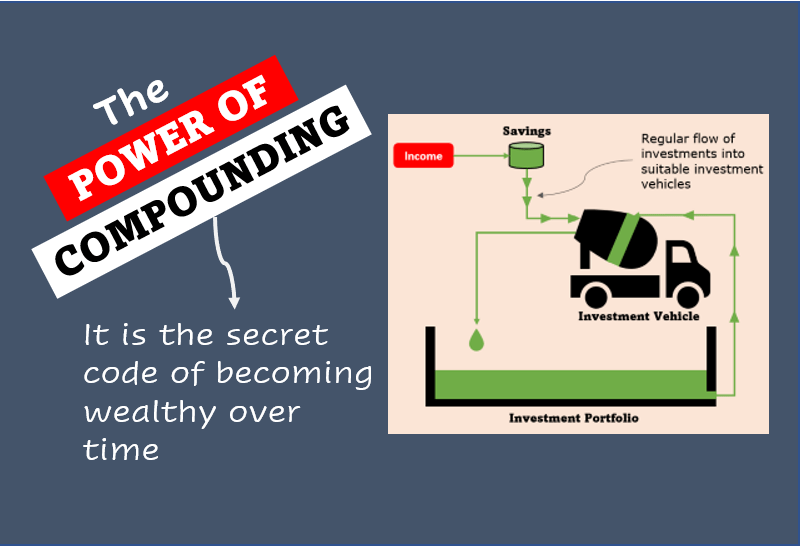
Compounding is the process through which investment earnings generate additional earnings over time. Instead of earning returns only on your original investment, you may also earn returns on previously accumulated gains.
This is one of the major advantages of a patient, long-term investment approach. The longer money remains invested, the more opportunities it has to compound, although actual returns are never guaranteed.
How Compounding Works
Imagine investing $5,000 and earning an illustrative average annual return of 7%. If returns are reinvested, the investment can grow over time without adding any new money.
The illustration shows how the investment's value can increase as the holding period grows. The 7% rate is hypothetical, not a prediction or guaranteed market return. Real investments can rise and fall, and fees and taxes can reduce the final amount.
Why Long-Term Investors Focus on Compounding
Long-term investors often try to give their investments enough time to grow. They may reinvest dividends, make regular contributions, and avoid selling solely because of temporary market declines.
For example, an investor who regularly contributes to a diversified index fund may benefit from both market growth and the reinvestment of distributions. The SEC's Investor.gov (opens in a new tab) explains that consistent investing over time can help investors build wealth through compound growth.
Does Compounding Work for Traders?
Trading profits can also be reinvested, so compounding is not exclusive to long-term investing. However, frequent losses, transaction costs, taxes, and withdrawals can interrupt the growth process.
A trader must consistently generate profits after costs and taxes to compound capital successfully. That is difficult to achieve, and frequent trading does not guarantee higher returns.
Compounding Factor | Active Trading | Index Investing | Value Investing |
|---|---|---|---|
Reinvestment | Depends on trading results | Often through reinvestment and contributions | Through reinvested dividends and growth |
Holding Period | Usually shorter | Usually longer | Usually longer |
Effect of Costs | Frequent costs may reduce growth | Fund fees and trading costs matter | Research and transaction costs matter |
Main Growth Driver | Successful repeated trades | Market performance over time | Business growth and valuation |
Key Challenge | Consistent profitable execution | Staying invested | Choosing quality investments at sensible prices |
4. Risk and Return: Which Strategy Is More Suitable?
Trading and long-term investing both involve risk. Neither approach guarantees profits, and investors can lose some or all of their invested capital.
However, the types of risks can differ.
Risks of Active Trading
Active trading can expose investors to rapid price changes, unexpected news, and emotional decisions. Using borrowed money or leverage can increase potential losses. A trader may also make repeated mistakes by entering positions without a clear plan.
Day trading is particularly demanding. The SEC warns that short-term trading can be risky and may result in substantial losses over a short period.
Risks of Long-Term Investing
Long-term investing does not eliminate market risk. A diversified index fund can still fall when the overall market declines. Individual value investments can also lose value if a company's business performance deteriorates or the original valuation assumptions prove incorrect.
Diversification can help reduce the impact of poor performance from one investment, but it cannot guarantee a profit or protect against every market decline.
Risk Factor | Active Trading | Index Investing | Value Investing |
|---|---|---|---|
Market Volatility | High short-term exposure | Exposed to broad market movements | Exposed to market and company risks |
Emotional Pressure | Often high | Usually lower with a disciplined plan | Can be high during long declines |
Diversification | Depends on trading strategy | Often broad | Depends on selected companies |
Leverage Risk | May be significant | Usually not required | Usually not required |
Main Risk Control | Position sizing and stop-loss planning | Asset allocation and diversification | Valuation discipline and research |
5. Index Investing vs. Value Investing
Long-term investing is not a single strategy. Two common approaches are index investing and value investing.
What Is Index Investing?
Index investing involves purchasing a fund designed to track a market index, such as the S&P 500 in the United States or the Nifty 50 in India.
Rather than trying to select the best-performing stocks individually, an index fund aims to mirror the performance of its chosen benchmark. This approach can provide exposure to multiple companies through a single investment.
SEBI explains that index mutual funds follow a passive approach, generally require less active management, and can provide diversification across the securities included in an index.
What Is Value Investing?
Value investing involves looking for companies whose shares appear to be trading below their estimated intrinsic value. Investors study business fundamentals to decide whether a company's market price offers an attractive opportunity.
Common factors include:
Earnings and revenue growth.
Cash flow and debt levels.
Competitive advantages.
Management quality.
Price-to-earnings and other valuation measures.
Long-term business prospects.
Value investing requires patience because the market may take time to recognise a company's underlying value. A low share price alone does not mean a stock is undervalued.
Index vs. Value Investing
Factor | Index Investing | Value Investing | Active Trading |
|---|---|---|---|
Research Requirement | Low to moderate | High | High and continuous |
Investment Selection | Based on an index | Individual undervalued companies | Short-term opportunities |
Diversification | Often broad | Depends on holdings | Depends on strategy |
Time Horizon | Long term | Usually long term | Short term |
Main Objective | Match index performance | Benefit from undervaluation | Capture price movements |
6. Costs That Can Reduce Investment Returns
Investment performance should always be evaluated after expenses. Even small costs can make a difference when they occur repeatedly.
Active traders may pay brokerage charges, bid-ask spreads, exchange fees, platform charges, and other transaction-related costs. Depending on the market and broker, some costs may apply even when an advertised commission is zero.
Long-term investors also face costs, including fund expense ratios, advisory fees, and transaction charges. However, passive index funds often have lower management costs because they do not require the same level of active security selection.
Cost Type | Active Trading | Index Investing | Value Investing |
|---|---|---|---|
Brokerage | Can accumulate with frequent trades | Usually lower due to fewer trades | Depends on trading frequency |
Fund Fees | Depends on products used | Expense ratio applies to funds | Depends on investment vehicle |
Research Costs | Potentially high | Usually low | Can require detailed research |
Taxes and Reporting | More frequent transactions to track | Often fewer sales | Depends on realised gains |
Time Cost | High | Generally low | Moderate to high |
7. Which Strategy Should You Choose?
The right approach depends on your financial goals, knowledge, available time, risk tolerance, and investment horizon. A strategy that suits one person may not be suitable for another.
Active trading may suit people who:
Have time to monitor markets regularly.
Understand technical analysis and risk management.
Can handle frequent gains and losses.
Have a written trading plan.
Can afford to risk the capital allocated to trading.
Index investing may suit people who:
Prefer a simpler investment approach.
Want diversified market exposure.
Have long-term financial goals.
Prefer fewer buying and selling decisions.
Want to invest regularly over time.
Value investing may suit people who:
Enjoy researching individual businesses.
Understand financial statements and valuations.
Can remain patient when markets fluctuate.
Are comfortable holding investments for years.
Can assess both business quality and price.
Some investors use a combination of approaches, keeping a diversified long-term portfolio as their foundation while allocating a smaller, clearly defined amount to active trading. This can help separate long-term goals from speculative activity, but it does not remove investment risk.
Important Points to Remember
Trading focuses on short-term price movements, while long-term investing focuses on growth over several years.
Active trading generally requires more time, monitoring, and decision-making.
Frequent selling can create more taxable events in taxable accounts.
Tax treatment depends on the country, asset type, holding period, and account.
Compounding can support long-term wealth creation when earnings remain invested.
Index funds offer diversified exposure but still carry market risk.
Value investing requires detailed research and patience.
No investment strategy guarantees profits or protects against losses.
Frequently Asked Questions
Is trading better than long-term investing?
Neither is universally better. Trading may appeal to people who understand market movements and can dedicate time to managing risk. Long-term investing may be more suitable for people who want to build wealth gradually.Which strategy requires less time?
Index investing generally requires less daily attention. Active trading requires regular market monitoring, research, and frequent decisions.Is long-term investing more tax-efficient?
It can be more tax-efficient in certain taxable accounts because fewer sales may mean fewer realised gains, and some countries offer favourable tax treatment for assets held longer. The exact rules depend on your jurisdiction.Can traders benefit from compounding?
Yes. Traders can reinvest their profits to grow their capital. However, frequent losses, fees, taxes, and withdrawals can reduce the benefits of compounding.Are index funds suitable for beginners?
Index funds can be a straightforward way to access a diversified group of investments. Beginners should still understand the fund's costs, underlying index, risks, and investment timeframe.