

A personal loan can help you manage unexpected expenses, medical bills, wedding costs, home renovations, education expenses, or other financial needs without using your savings (opens in a new tab). Since most personal loans are unsecured, borrowers generally do not need to provide collateral such as property, gold, or a vehicle.
However, before applying, it is important to understand personal loan interest rates, eligibility requirements, repayment terms, processing fees, and other charges. Choosing the right loan can help you manage monthly EMIs without putting unnecessary pressure on your budget.
In this guide, we will explain how personal loans work in India, who can apply, what documents are required, and how to choose a suitable loan.
What Is a Personal Loan?
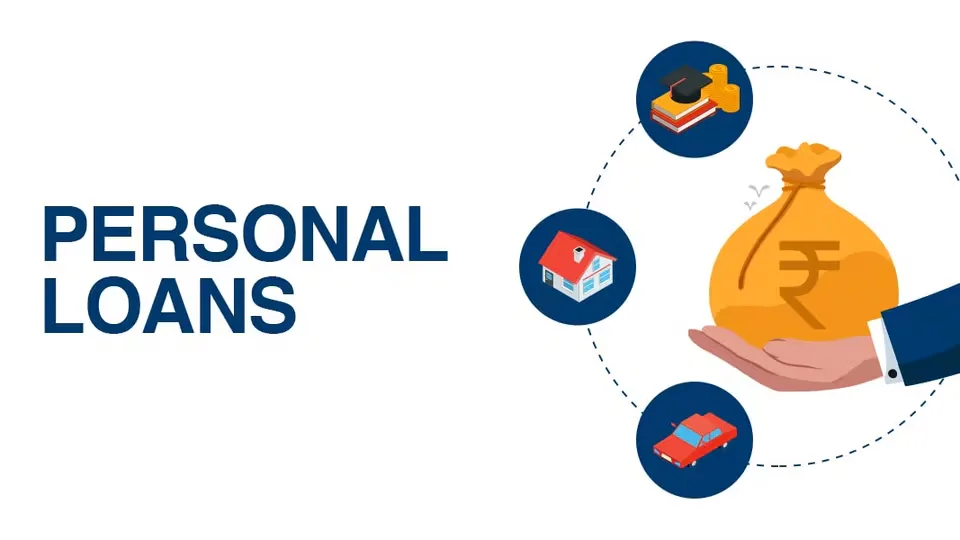
A personal loan is an unsecured loan offered by banks and financial institutions to individuals for personal expenses. Unlike home loans or car loans, it generally does not require the borrower to specify or secure the loan against a particular asset.
Once approved, the lender transfers the loan amount to the borrower's bank account. The borrower then repays the amount through fixed monthly instalments, commonly known as Equated Monthly Instalments (EMIs).
Personal loans can be used for several purposes, including:
Medical emergencies and hospital expenses.
Wedding and family functions.
Home renovation and repairs.
Higher education and professional courses.
Travel and vacation expenses.
Debt consolidation.
Unexpected household expenses.
The loan amount, interest rate, repayment period, and approval conditions depend on the lender's policies and the applicant's financial profile.
How Do Personal Loans Work?
The personal loan process generally involves applying for a specific amount, completing the lender's verification process, receiving approval, and repaying the loan through monthly instalments.
Here is how it usually works:
Loan Application: Choose a lender and apply for the amount you need.
Eligibility Check: The lender evaluates your income, employment status, credit history, and existing financial obligations.
Document Verification: Submit the required identity, address, and income documents.
Loan Approval: If your application meets the lender's requirements, the loan is approved.
Disbursement: The approved amount is transferred to your bank account.
EMI Repayment: Repay the loan through monthly instalments over the agreed tenure.
Before accepting an offer, carefully review the interest rate, processing fee, repayment schedule, and applicable terms.
Personal Loan Interest Rates in India
The interest rate is one of the most important factors to consider before taking a personal loan. It determines how much extra money you will pay to the lender over the repayment period.
Personal loan interest rates vary between banks and financial institutions. The rate offered to an individual may depend on:
Credit Score: Applicants with a strong credit history may qualify for more competitive interest rates.
Monthly Income: A stable and higher income can improve your borrowing profile.
Employment Type: Salaried and self-employed applicants may receive different loan offers.
Existing Loans: Multiple ongoing loans or high credit card balances can affect the lender's assessment.
Loan Tenure: The repayment period can influence the overall interest cost.
Types of Personal Loan Interest Rates
1. Fixed Interest Rate
A fixed interest rate generally remains unchanged throughout the loan tenure. Your EMI stays predictable, making monthly budgeting easier.
2. Floating Interest Rate
A floating interest rate can change according to the applicable benchmark or lender's terms. Depending on the loan agreement, changes may affect your EMI, repayment tenure, or both.
Important: Do not compare loan offers based only on the advertised interest rate. Check the Annual Percentage Rate (APR), which includes the interest rate and applicable associated charges. The Reserve Bank of India requires a Key Facts Statement (KFS) for covered retail loans to help borrowers understand the loan's costs and terms.
Personal Loan Eligibility Criteria
Before approving a personal loan, banks and financial institutions evaluate whether an applicant can comfortably repay the borrowed amount.
Although eligibility conditions differ between lenders, the following are common requirements.
Personal Loan Eligibility Criteria
Before approving a personal loan, lenders evaluate these five important factors to understand your financial stability and repayment capacity.
Age Requirements
Most lenders have a minimum age requirement, commonly around 21 years. The maximum eligible age may depend on whether the applicant is salaried or self-employed and the loan maturity date.
Minimum Monthly Income
Applicants must demonstrate sufficient income to manage their monthly EMI payments. The minimum income requirement varies by lender, location, and employment category.
Employment Stability
Salaried applicants may need to demonstrate stable employment, while self-employed applicants may need to provide business and income records.
Credit Score
A good credit score improves your chances of getting a personal loan with favourable terms. Many lenders prefer scores around 700 or higher, although their actual requirements differ.
Existing Financial Obligations
Lenders consider your existing EMIs, credit card dues, and other financial commitments before deciding how much additional credit you can afford.
Important Eligibility Note
Eligibility requirements are different for each bank and financial institution. Check the lender's latest conditions before submitting your application.
Documents Required for a Personal Loan
The documentation process is generally straightforward, particularly when applying through a bank where you already have an account.
Commonly required documents include:
Document Type | Examples |
|---|---|
Identity Proof | PAN Card, Aadhaar Card, Passport |
Address Proof | Aadhaar Card, Passport, Utility Bill |
Income Proof | Salary Slips, Income Tax Returns |
Bank Statements | Recent 3–6 months' statements |
Employment Proof | Employee ID or employment details |
Business Proof | Business registration or relevant financial records for self-employed applicants |
The exact documents depend on the lender's verification requirements. Some lenders may also offer digital verification facilities.
Major Benefits of Personal Loans
Personal loans offer flexibility and convenience, making them a popular borrowing option for different financial requirements.
1. No Collateral Required
Most personal loans are unsecured. This means you generally do not need to pledge property, gold, or other valuable assets to obtain the loan.
2. Flexible Usage
Unlike certain purpose-specific loans, personal loans can be used for various personal expenses, including travel, weddings, education, medical bills, and home improvements.
3. Quick Loan Processing
Many banks and financial institutions provide online applications and digital verification. Eligible customers may receive approval and disbursement relatively quickly, depending on the lender.
4. Flexible Repayment Tenure
Borrowers can select from the repayment periods offered by their lenders. Choosing a suitable tenure can help balance monthly EMIs and total interest costs.
5. Predictable Monthly Payments
For fixed-rate loans, the EMI generally remains unchanged throughout the agreed repayment period, making it easier to plan monthly expenses.
6. Debt Consolidation
A personal loan may help combine multiple high-interest debts into one repayment schedule. However, this is beneficial only when the new loan's overall cost and terms are more favourable.
How to Calculate Personal Loan EMI
Before accepting a loan offer, calculate the monthly EMI to understand whether it fits your budget.
The EMI depends on three main factors:
Principal amount: The total amount borrowed.
Interest rate: The annual interest charged by the lender.
Loan tenure: The time allowed to repay the loan.
The standard EMI formula is:
\[ EMI = \frac{P \times R \times (1+R)^N}{(1+R)^N-1} \]
Where:
P = Principal loan amount
R = Monthly interest rate
N = Total number of monthly instalments
Personal Loan EMI Example
Suppose you borrow ₹3,00,000 at an annual interest rate of 12% for 3 years.
Details | Amount |
|---|---|
Loan Amount | ₹3,00,000 |
Annual Interest Rate | 12% |
Loan Tenure | 36 Months |
Monthly EMI | Approximately ₹9,964 |
Total Repayment | Approximately ₹3,58,700 |
Total Interest | Approximately ₹58,700 |
Illustrative calculation only. Actual EMI and total repayment may vary due to lender terms, fees, and rounding.
Factors to Consider Before Applying for a Personal Loan
Taking a loan without comparing the terms can increase your financial burden. Consider these important factors before making a decision.
6 Important Things to Consider Before Taking a Personal Loan
Make a confident borrowing decision by checking these essential factors before applying for a personal loan.
Compare Interest Rates
Check offers from multiple banks and financial institutions. Even a small difference in interest rates can affect your total repayment amount.
Check Processing Fees
Some lenders charge a processing fee when approving a personal loan. Check whether GST and other applicable charges are additional.
Understand Prepayment Charges
If you plan to repay your loan early, check the lender's foreclosure and part-payment policies, including any applicable charges.
Choose the Right Loan Tenure
A longer tenure generally reduces the monthly EMI but can increase total interest. A shorter tenure may reduce interest costs but increase monthly payments.
Review the Loan Agreement
Read the repayment schedule, late payment charges, applicable interest rate, and other conditions carefully before signing the agreement.
Borrow Only What You Need
Avoid taking a larger loan simply because the lender offers it. Borrow according to your actual financial requirements and repayment capacity.
Always calculate your monthly EMI and total repayment amount before accepting a personal loan offer.
Common Personal Loan Mistakes to Avoid
Many borrowers focus only on getting their loan approved and overlook the long-term financial commitment.
Here are some mistakes worth avoiding:
Applying to several lenders without comparing their offers.
Ignoring processing fees and additional charges.
Choosing a longer tenure without calculating the total interest.
Missing EMI payment deadlines.
Borrowing more than your repayment capacity.
Ignoring the loan agreement and repayment conditions.
Taking a loan from an unverified lending application.
A careful comparison can help you avoid unnecessary costs and make borrowing more manageable.
Personal Loan vs Credit Card Loan
Personal loans and credit card loans are both borrowing options, but they differ in repayment structure, availability, and costs.
Feature | Personal Loan | Credit Card Loan |
|---|---|---|
Loan Amount | Based on eligibility | Based on available credit limit |
Interest Rate | Depends on lender and profile | Depends on card issuer and offer |
Repayment | Fixed EMI schedule | EMI or issuer-specific repayment |
Collateral | Generally not required | Not required |
Availability | Requires loan approval | Often available to eligible cardholders |
Usage | Usually flexible | Depends on the loan facility |
Which is better?
A personal loan may be suitable when you need a larger amount with a structured repayment schedule. A credit card loan may be convenient for eligible cardholders who need smaller or pre-approved credit.
Always compare the APR, fees, and total repayment before choosing either option.
How to Improve Your Chances of Personal Loan Approval
If you are planning to apply for a personal loan, a few financial habits can help strengthen your application.
Maintain a healthy credit score by paying EMIs and credit card bills on time.
Keep your existing debt obligations manageable.
Maintain a stable source of income.
Check your credit report for errors before applying.
Provide accurate income and employment information.
Select a loan amount that matches your repayment capacity.
Avoid submitting multiple loan applications within a short period.
These steps can improve your financial profile, although final approval always depends on the lender's assessment.
Is a Personal Loan the Right Choice for You?
A personal loan can be useful when you need money for an important expense and have a clear repayment plan. It offers flexibility without generally requiring collateral.
However, borrowing also creates a financial responsibility that continues until the loan is fully repaid.
Before applying, calculate your EMI, compare interest rates, understand additional charges, and check whether your monthly income can comfortably support the repayment.
A well-planned borrowing decision can help you manage financial needs without creating unnecessary pressure on your future budget.
Conclsion
A personal loan can provide financial support when you need additional funds for personal expenses, emergencies, or important life events. However, choosing the right loan requires more than looking at the advertised interest rate.
Understanding eligibility criteria, comparing lenders, calculating EMIs, and checking additional charges can help you make a more informed decision.
Before applying, evaluate your repayment capacity and borrow only what you genuinely need. Responsible borrowing can help you manage your financial requirements while keeping your long-term financial goals on track.
Frequently Asked Questions
Find answers to common questions about personal loans.