

India's economy is facing renewed inflation concerns as retail prices increased sharply in October 2026. The latest Consumer Price Index (CPI) data released by the Ministry of Statistics and Programme Implementation (MoSPI) showed that India's retail inflation reached 6.09% in October, moving above the Reserve Bank of India's (RBI) upper tolerance limit of 6%.
The development has attracted attention from investors, businesses, policymakers, and consumers. Higher inflation can reduce household purchasing power, increase operating expenses for companies, and influence the central bank's decisions about borrowing costs.
The situation has also created uncertainty in the Indian stock market. Investors are closely watching the possibility of another interest rate increase during the RBI's December monetary policy meeting. The central bank had already increased the repo rate by 25 basis points to 5.50% in October 2026 and shifted its policy stance to calibrated tightening.
On November 13, 2026, the Sensex declined 318.56 points, while the Nifty 50 dropped 155.05 points. Rising inflation, concerns about further monetary tightening, and higher crude oil prices contributed to cautious market sentiment.
But what does this development mean for ordinary investors? Could higher interest rates affect banking stocks, automobile companies, and real estate businesses?
Let's understand the latest economic situation and its potential market implications.
1. India's October 2026 Inflation: What Do the Latest Numbers Show?
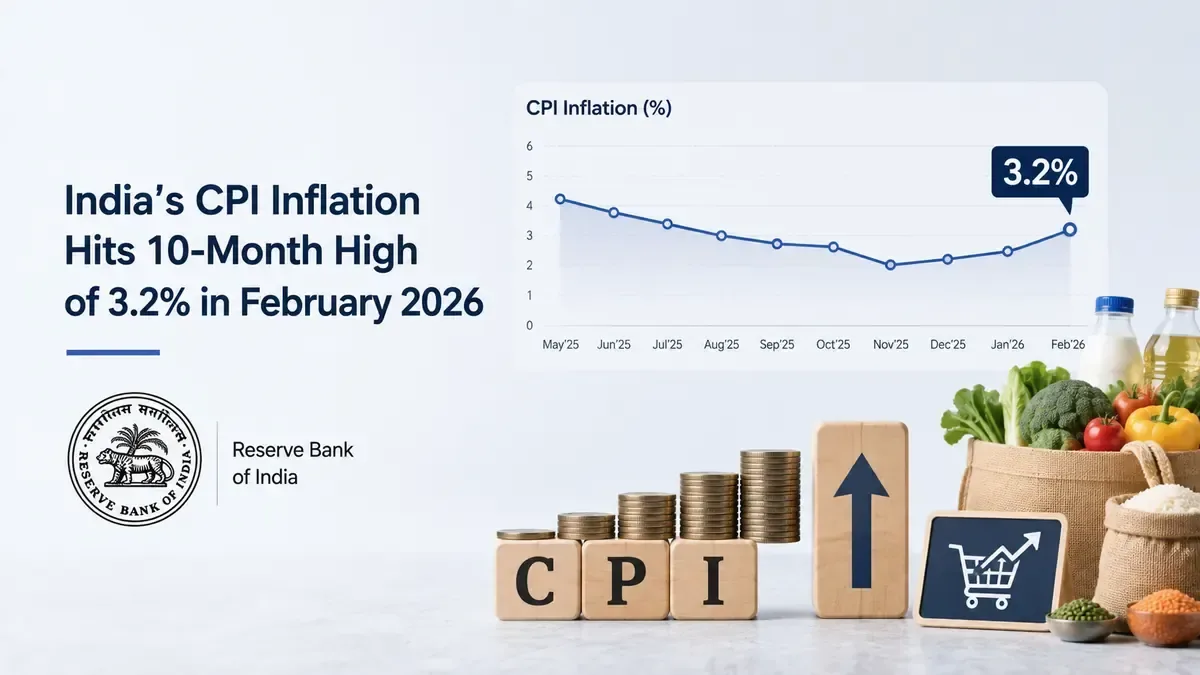
Retail inflation measures the change in prices consumers pay for everyday goods and services. It includes categories such as food, housing, transportation, clothing, healthcare, and other household expenses.
According to the latest government release dated November 12, 2026, India's combined retail inflation increased from 5.54% in September to 6.09% in October.
Food inflation also increased considerably, reaching 8.94% during the same period. This indicates that rising food prices remain an important source of pressure on household budgets.
India's Latest Inflation Data
Economic Indicator | September 2026 | October 2026 | Change |
|---|---|---|---|
Retail Inflation (CPI) | 5.54% | 6.09% | +0.55 percentage points |
Food Inflation | 7.74% | 8.94% | +1.20 percentage points |
Rural Inflation | 6.08% | 6.63% | +0.55 percentage points |
Urban Inflation | 4.88% | 5.41% | +0.53 percentage points |
Source: Ministry of Statistics and Programme Implementation. October figures are provisional; September figures are final.
Why Is Inflation Increasing?
Several factors can contribute to rising retail inflation. Food prices, energy costs, transportation expenses, and supply disruptions can influence the overall price level.
Some important factors behind the latest increase include:
Higher Food Prices: Food inflation reached 8.94%, putting additional pressure on household spending.
Energy and Transportation Costs: Changes in crude oil prices can increase transportation and production expenses.
Supply-Side Challenges: Weather conditions and agricultural supply disruptions can affect the availability and pricing of essential commodities.
Broader Price Pressures: Inflation has spread across multiple consumer categories, making it more difficult to control through temporary price adjustments.
Reuters reported that food prices, including onions, garlic, and ginger, contributed to the October increase. It also highlighted concerns about broader price pressures and the possibility that inflation could remain elevated.
2. Why Is the RBI Considering Another Interest Rate Hike?
The Reserve Bank of India plays an important role in maintaining price stability while supporting sustainable economic growth.
One of its major monetary policy tools is the repo rate, which influences the cost at which banks borrow funds from the central bank.
When inflation rises beyond the RBI's preferred range, policymakers may consider increasing interest rates to moderate borrowing and spending.
India's inflation-targeting framework aims to maintain retail inflation at 4%, with a tolerance range of 2% to 6%. October's reading of 6.09% moved above the upper boundary.
RBI's Recent Monetary Policy Developments
Policy Indicator | Previous Position | Latest Position | Significance |
|---|---|---|---|
Repo Rate | 5.25% | 5.50% | Borrowing costs increased |
Policy Stance | Neutral | Calibrated tightening | Greater focus on inflation |
October CPI | 5.54% in September | 6.09% | Inflation exceeded 6% |
Next MPC Meeting | October 5–7 | December 2–4 | Next policy decision |
Will the RBI Increase Rates in December?
The RBI's next Monetary Policy Committee (MPC) meeting is scheduled for December 2–4, 2026.
Following the latest inflation figures, economists have increased their expectations of another 25-basis-point rate hike. However, the final decision will depend on incoming inflation data, economic growth, crude oil prices, and the overall outlook.
A rate increase is possible, but it has not been officially announced. The RBI could also decide to maintain the existing rate while monitoring price movements.
3. How Does an RBI Rate Hike Affect the Indian Economy?
An increase in the repo rate can influence the economy through several channels. When borrowing becomes more expensive, consumers may postpone large purchases, businesses may reconsider expansion plans, and investment activity can slow.
For example, a person planning to purchase a house through a home loan may face higher monthly instalments if their lending rate increases. Similarly, companies relying on borrowed capital may experience higher financing expenses.
This is how monetary policy can influence overall economic demand.
The Interest Rate Transmission Process
Economic Factor | Effect of Rate Hike | Business Impact | Market Implication |
|---|---|---|---|
Home Loans | Borrowing becomes expensive | Housing demand may slow | Realty stocks may face pressure |
Vehicle Loans | EMIs may increase | Vehicle purchases may decline | Auto stocks may weaken |
Business Loans | Financing costs rise | Expansion may become expensive | Corporate earnings may suffer |
Bank Deposits | Deposit rates may increase | Funding costs can rise | Banking margins may change |
The impact is not always immediate. Banks may adjust lending and deposit rates at different speeds, while consumers and companies may take time to respond to changing borrowing costs.
4. Banking Sector: Will Higher Interest Rates Affect Bank Stocks?
The banking sector is one of the first areas investors examine when interest rate expectations change.
Banks earn income by lending money and collecting interest from borrowers. When interest rates increase, lending rates may rise, potentially improving interest income. However, banks also need to pay interest on deposits, which can increase their funding expenses.
The overall impact depends on how quickly lending and deposit rates adjust.
Potential Impact on Banking Businesses
1. Higher Lending Rates
Banks may increase interest rates on selected loans, depending on their lending benchmarks and contractual conditions. This can improve interest income on certain loans.
2. Rising Deposit Costs
Banks compete to attract deposits. When interest rates rise, they may need to offer higher returns to depositors, increasing their overall funding costs.
3. Changes in Loan Demand
Higher borrowing costs can discourage individuals and businesses from taking new loans. This may affect credit growth over time.
4. Bond Portfolio Valuations
Rising market yields can reduce the market value of existing fixed-income securities. Banks holding substantial bond portfolios may experience valuation pressure.
Banking Sector: Key Factors to Watch
Banking Indicator | Possible Impact | Investor Concern | What to Monitor |
|---|---|---|---|
Net Interest Margin | May improve or decline | Lending and deposit repricing | NIM performance |
Credit Growth | May slow | Lower loan demand | Loan growth |
Deposit Costs | May increase | Higher funding expenses | Cost of deposits |
Bond Valuations | May weaken | Mark-to-market losses | Bond portfolio exposure |
Important Point: A higher repo rate is not automatically positive or negative for every bank. Investors should examine deposit growth, asset quality, loan demand, and net interest margins before evaluating banking stocks.
5. Automobile Sector: Could Higher EMIs Slow Vehicle Sales?
The automobile industry is particularly sensitive to consumer borrowing costs because many customers depend on vehicle loans to purchase cars, motorcycles, and commercial vehicles.
When lending rates increase, monthly instalments can become more expensive. This may influence purchasing decisions, particularly among price-sensitive customers.
For example, a family planning to purchase a new car may postpone the decision if its monthly loan repayment increases significantly.
How Inflation and Higher Interest Rates Affect Automakers
Lower Consumer Purchasing Power: Higher food, fuel, and household expenses leave consumers with less disposable income.
Expensive Vehicle Financing: Higher loan interest rates can increase the total cost of purchasing a vehicle.
Production Costs: Companies may face higher expenses for raw materials, logistics, and components.
Demand Uncertainty: Customers may delay vehicle upgrades or choose more affordable models.
Automobile Sector Impact Analysis
Automobile Segment | Potential Challenge | Business Impact | Key Indicator |
|---|---|---|---|
Passenger Vehicles | Higher car loan EMIs | Possible demand slowdown | Monthly sales |
Two-Wheelers | Reduced disposable income | Pressure on entry-level demand | Retail registrations |
Commercial Vehicles | Expensive business financing | Slower fleet expansion | Fleet demand |
Electric Vehicles | Higher financing costs | Purchase decisions may slow | EV registrations |
Which Automobile Companies Could Face Pressure?
Investors generally monitor companies such as Maruti Suzuki, Tata Motors, Mahindra & Mahindra, and Hero MotoCorp when evaluating automobile sector performance.
However, the impact can vary according to product demand, pricing power, financing arrangements, production costs, and individual company earnings.
6. Realty Sector: Why Are Property Stocks Sensitive to Interest Rates?
Real estate is another sector that can face pressure when borrowing costs increase.
Purchasing a residential property often involves a substantial home loan. Even a relatively small increase in interest rates can influence the monthly repayment amount and the total interest paid over the loan period.
When home financing becomes more expensive, some prospective buyers may postpone property purchases or reconsider their budgets.
Major Challenges for Real Estate Companies
Higher Home Loan EMIs: Expensive housing finance can reduce affordability, especially for first-time homebuyers.
Slower Property Demand: Buyers may delay purchasing decisions when household budgets are already under pressure from inflation.
Higher Construction Expenses: Rising prices of cement, steel, labour, and transportation can increase project costs.
Financing Pressure on Developers: Companies with substantial debt may face higher interest expenses if their borrowing costs increase.
Realty Sector: Potential Market Impact
Real Estate Segment | Interest Rate Sensitivity | Possible Effect | Important Metric |
|---|---|---|---|
Residential Housing | High | Lower homebuyer affordability | Housing sales |
Commercial Property | Moderate | Higher project financing costs | Leasing demand |
Real Estate Developers | High | Increased debt servicing expenses | Debt-to-equity |
Construction Projects | Moderate | Higher input and financing costs | Project margins |
Real estate companies such as DLF, Godrej Properties, and Prestige Estates are among the businesses investors may monitor when analysing the sector.
Nevertheless, strong project demand, healthy balance sheets, and manageable debt levels can help individual companies withstand a higher interest rate environment.
7. Sensex and Nifty Fall: How Did Investors React?
The Indian stock market reacted cautiously after the October inflation data showed a significant increase in consumer prices.
On Friday, November 13, 2026, benchmark indices ended lower, interrupting their three-session winning streak.
The decline reflected a combination of concerns, including higher inflation, expectations of another RBI rate hike, rising crude oil prices, and profit booking following recent market gains.
Indian Stock Market Performance on November 13, 2026
Market Indicator | Closing Level | Daily Change | Performance |
|---|---|---|---|
BSE Sensex | 81,592.45 | -318.56 points | -0.39% |
NSE Nifty 50 | 25,144.30 | -155.05 points | -0.61% |
Nifty Bank | Market-sensitive | Financial stocks weakened | Negative sentiment |
Market Trend | Three-day rally ended | Selling pressure | Cautious outlook |
Why Are Investors Becoming Cautious?
There are several reasons behind the changing market sentiment.
Interest Rate Uncertainty: Investors are concerned that another RBI rate increase could make borrowing more expensive.
Higher Crude Oil Prices: Rising energy costs can increase inflationary pressure and affect corporate profitability.
Profit Booking: After recent gains, some investors may choose to book profits.
Corporate Earnings Concerns: Higher operating and borrowing expenses could influence future earnings expectations.
A declining stock market does not necessarily indicate a long-term economic slowdown. Investors also consider earnings growth, foreign investment, global market movements, and domestic demand when making decisions.
8. Which Other Economic Indicators Should Investors Watch?
Inflation is an important economic indicator, but it should not be analysed in isolation. Investors need to understand how other economic developments influence the RBI's decisions and stock market performance.
Some important indicators include:
Economic Indicator | What It Measures | Why It Matters | Market Relevance |
|---|---|---|---|
CPI Inflation | Consumer price changes | Indicates inflation pressure | RBI policy expectations |
Repo Rate | RBI policy interest rate | Influences borrowing costs | Banking and rate-sensitive stocks |
GDP Growth | Overall economic output | Measures economic strength | Corporate earnings |
Crude Oil Prices | Global petroleum costs | Influences energy and transport expenses | Inflation and company margins |
Bond Yields | Government borrowing returns | Reflects interest rate expectations | Banking and equity valuations |
Industrial Production | Manufacturing and industrial activity | Indicates business momentum | Industrial and auto stocks |
Why Bond Yields Matter
Government bond yields are particularly important during periods of rising inflation.
When investors expect interest rates to increase, bond yields may rise as well. Higher yields can make fixed-income investments more attractive relative to equities.
This can influence stock valuations, particularly companies whose future earnings are heavily dependent on long-term growth expectations.
Investors should also monitor foreign institutional investor (FII) activity because international investment flows can influence domestic market sentiment.
9. What Could Happen to the Stock Market After the December RBI Meeting?
The RBI's December policy announcement could become an important event for Indian financial markets.
Investors will be watching the repo rate decision, inflation forecasts, policy stance, and comments from the RBI Governor.
Three broad scenarios are worth considering.
Scenario 1: RBI Increases the Repo Rate
If inflation remains elevated, the RBI could announce another 25-basis-point increase.
This may increase borrowing costs and create short-term pressure on interest-sensitive sectors such as banking, automobiles, and real estate.
However, the market reaction will also depend on whether the decision matches investor expectations.
Scenario 2: RBI Maintains the Existing Rate
If policymakers believe that inflation could moderate, the RBI may decide to maintain the existing repo rate.
Such a decision could provide some relief to investors, particularly if the central bank communicates confidence in the inflation outlook.
Scenario 3: RBI Signals Further Tightening
Even without an immediate rate increase, the RBI could maintain a cautious policy stance and signal that additional tightening remains possible.
This may keep investors focused on inflation data, bond yields, and upcoming economic indicators.
December Policy: Possible Market Reactions
RBI Decision | Banking Sector | Auto Sector | Realty Sector |
|---|---|---|---|
Repo Rate Increase | Margin and funding pressure | Higher loan costs | Housing affordability pressure |
Rate Unchanged | Greater stability | Potential demand support | Improved borrowing outlook |
Hawkish Guidance | Cautious investor sentiment | Demand uncertainty | Financing concerns |
These are possible market responses, not guaranteed outcomes. Actual performance will depend on company fundamentals, market expectations, and broader economic conditions.
10. How Can Investors Prepare for Rising Inflation?
During uncertain economic conditions, investors should avoid making decisions based only on daily market movements or headlines.
A better approach is to understand how inflation and interest rate changes influence different sectors and individual businesses.
Here are some important points to consider:
Monitor RBI Announcements: Follow monetary policy decisions, inflation projections, and changes in the repo rate.
Review Company Debt: Businesses with high borrowing requirements may be more exposed to increasing financing costs.
Study Quarterly Earnings: Pay attention to revenue growth, operating margins, and interest expenses.
Track Banking Performance: Compare deposit costs, credit growth, asset quality, and net interest margins.
Understand Sector Exposure: Automobile and real estate businesses can be particularly sensitive to changes in borrowing costs.
Avoid Emotional Decisions: Short-term market declines do not automatically indicate that every stock has become a poor investment.
Diversify Investments: Depending on individual financial goals and risk tolerance, diversification can help reduce concentration risk.
Important Investor Reminder: Rising inflation creates uncertainty, but it can also produce different opportunities across industries. Investment decisions should be based on research, financial objectives, and risk tolerance rather than speculation about one RBI announcement.
Final Verdict: Will Inflation and RBI Rate Hikes Put Pressure on Indian Markets?
India's October 2026 retail inflation reading of 6.09% has created fresh concerns for investors and policymakers. With food inflation reaching 8.94% and headline inflation moving above the RBI's 6% upper tolerance limit, controlling price pressures has become an important economic priority.
The RBI's December 2–4 policy meeting will be closely watched, particularly because the central bank has already increased the repo rate to 5.50% and adopted a calibrated tightening stance.
Banking, automobile, and real estate companies may experience different effects from higher borrowing costs. Banks could face changes in funding expenses and lending margins, automobile companies may encounter weaker loan affordability, and property developers could face pressure from expensive financing.
However, the stock market's direction will not depend on inflation alone. Corporate earnings, economic growth, crude oil prices, global market conditions, and foreign investment flows will also play important roles.
The key takeaway: Investors should closely monitor inflation trends and RBI policy signals rather than assume that another rate hike or a temporary market decline will determine the long-term direction of Indian equities.